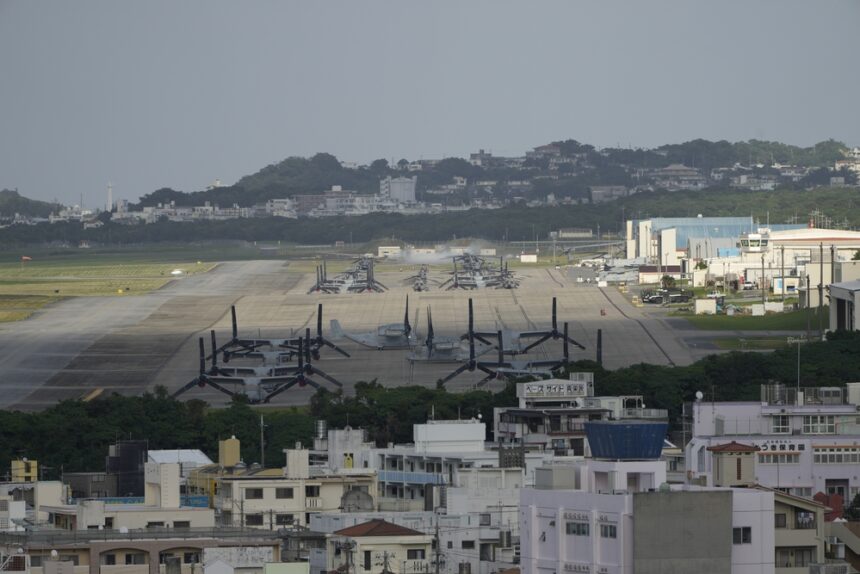
The US military on Okinawa has paused operations for 48 hours, imposed a month long curfew and ordered additional training, after a Marine was arrested on suspicion of robbing and killing a Japanese woman.
What are the allegations?
Police arrested a 20 year old lance corporal stationed at Futenma Air Station on Sunday on suspicion of killing Anna Yagi, 39, at a hotel in Naha the previous day, and of taking her wallet and backpack. The Marine, identified as Devin Jacob Ballard, has denied the allegations according to police. It was not immediately clear whether he had legal representation able to comment.
Has anything been established?
No. An arrest on suspicion is not a charge, a charge is not a conviction, and nothing here has been tested by any court. Japanese criminal procedure permits extended detention before any charging decision, which means a period may pass before prosecutors determine whether to proceed.
What has the military done?
Ordered a pause and a curfew. The commander of III Marine Expeditionary Force said in a statement that incidents of this kind demand reflection and that forces would take time to consider discipline, standards and alliance responsibilities. The 48 hour pause and the month long curfew apply across the command.
Why does the response go beyond one case?
Because of what preceded it. Serious crimes involving American service members on Okinawa have recurred over decades and have repeatedly produced large scale local protest, political strain between Tokyo and Washington, and demands for changes to the status of forces arrangements governing US personnel there. A command responding this quickly and this visibly is responding to that history as much as to this week.
Why is Okinawa particularly sensitive?
Scale and proximity. The island hosts a disproportionate share of US military facilities in Japan relative to its size and population, and the resulting burden has been a long standing local grievance. Its position near Taiwan and the Chinese mainland is precisely why those bases exist, which makes the tension structural rather than resolvable through any single response.
What is the jurisdiction question?
Governed by agreement between the two governments. Arrangements covering US forces in Japan determine when Japanese authorities hold a suspect and when US custody applies, and those provisions have themselves been a source of friction and have been revised following previous cases. In this instance Japanese police made the arrest.
What should readers be careful about?
Early reporting and conclusions. One person has died and one person has been arrested and denies the allegations. Those are the established facts. Coverage of cases involving foreign military personnel frequently runs ahead of the evidence in both directions, and nothing published this week will be the final account.
What happens next?
A prosecutorial decision in Japan, and whatever the military’s review produces. Neither has a stated timeline.