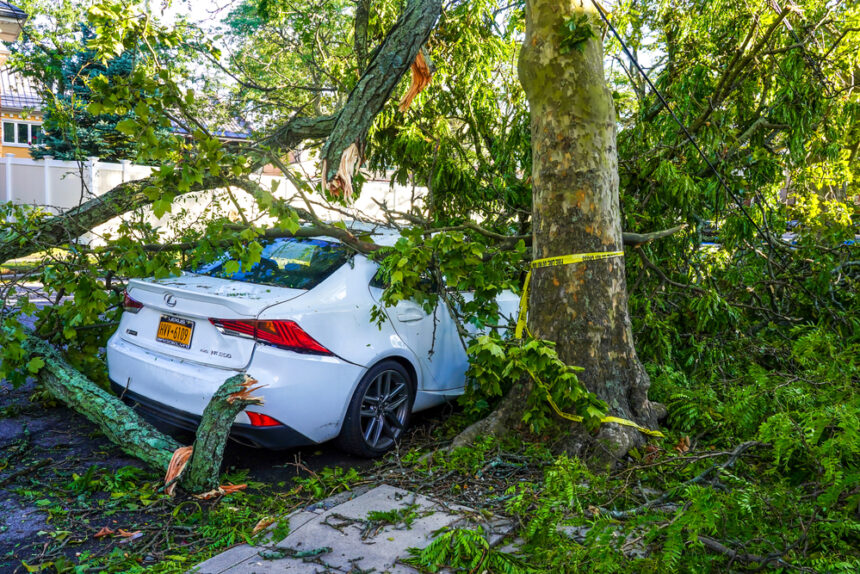
Florida’s governor declared a state of emergency on Tuesday evening for 25 counties ahead of Tropical Storm Isaias, which forecasters say could strengthen into a hurricane in the coming days.
Which areas are covered?
Twenty five counties across the Panhandle and north Florida, including Escambia, Santa Rosa, Okaloosa, Walton, Bay, Gulf, Franklin, Wakulla, Leon, Jefferson, Taylor, Madison, Hamilton, Suwannee, Columbia, Baker, Dixie, Gilchrist, Lafayette, Calhoun, Gadsden, Holmes, Jackson, Liberty and Washington. The declaration is a preparation measure allowing the state emergency agency to position resources before conditions arrive.
Where is it expected to go?
The central US Gulf Coast later in the week, according to the governor’s office, with impacts extending well beyond wherever the centre comes ashore. Heavy rainfall, strong winds, coastal flooding and isolated tornadoes are possible across north Florida regardless of the precise track.
Why is the rain the main concern?
Because the ground is already wet. The state has had significant recent rainfall, and saturated soil absorbs very little, so additional precipitation runs off immediately into creeks, drainage systems and low lying areas. The same rainfall total that would be manageable on dry ground can produce flash flooding on saturated ground, which is why Tropical Storm Isaias could cause problems disproportionate to its wind strength.
Does the category matter?
Less than people assume. Storm categories measure sustained wind speed only, and they say nothing about rainfall, storm surge or how long a system lingers. Inland flooding has historically caused more deaths in US tropical systems than wind, and a storm that never becomes a hurricane can still produce the most damaging outcome on this list.
What should residents do now?
Use the time before conditions deteriorate. Stock a supply kit with several days of water, food, medications and batteries, charge devices, fill vehicles with fuel, and identify where you would go if local officials order evacuation. Know whether your address sits in a flood zone or an evacuation zone, which county emergency management offices publish. Never drive through flooded roadways, which is how most flood deaths occur.
What about insurance?
Too late for new coverage on this storm. Standard homeowners policies do not cover flood damage, separate flood policies generally carry a 30 day waiting period, and insurers typically suspend new policies once a storm is named and approaching. Documenting property condition with photographs now is still worth doing.
Where should updates come from?
The National Hurricane Center, which issues advisories every six hours with intermediate updates when conditions change quickly, and county emergency management offices, which issue evacuation orders and local instructions. Everything in this article reflects Tuesday evening and will be superseded.
What happens next?
Forecast tracks will narrow over the coming days. Tropical Storm Isaias may or may not reach hurricane strength, and the more useful question for anyone in the covered counties is rainfall totals rather than classification.