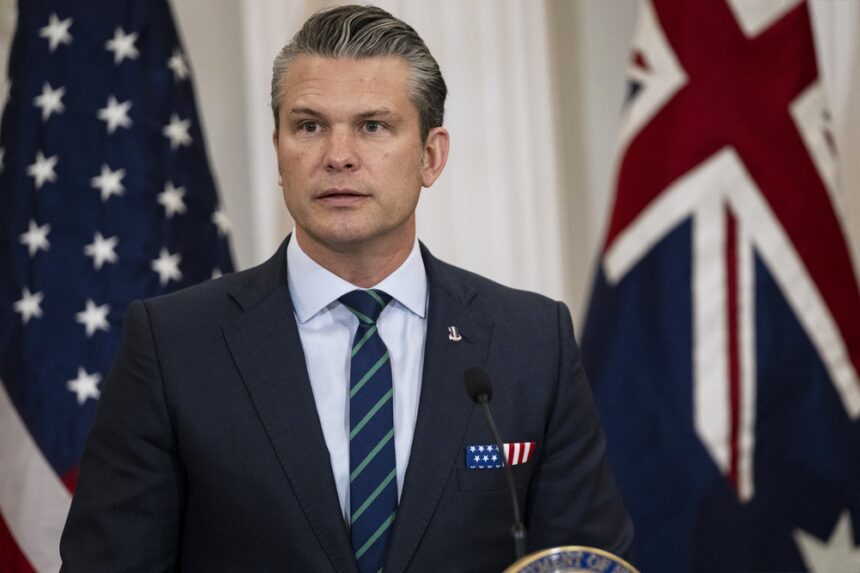
The defense secretary announced the creation of an Autonomous Warfare Command, among six new directives, while addressing roughly 600 service members at Marine Corps Base Quantico on Sept. 30.
What was announced?
Two items are described in the available account. The first is the new command, abbreviated AUTOWARCOM. The second is a project to study the future of warfare, to be led by three figures from outside government, including two technology executives and a former House speaker. The secretary said thinking on autonomous warfare should have begun a decade ago and framed the aim as technological and military dominance over the coming decades.
What are the other four directives?
Not reported. Six were announced and two are described, which means two thirds of the announcement is missing from the account available. That gap should be filled before anyone assesses what was actually set in motion.
What would such a command do?
That has not been detailed. Unified or functional commands in the US military organise forces and planning around a domain or mission, as existing commands do for space and cyber operations. A command built around autonomous systems would presumably consolidate development, doctrine and operational employment of uncrewed and software directed weapons that currently sit across several services. Until a charter is published, that is inference rather than description.
Why does the name matter?
Because autonomy covers a wide range. The term stretches from remotely piloted aircraft with a human making every engagement decision to systems that select and strike targets without one. Those are different capabilities raising different legal questions, and existing US policy has required human judgment over the use of lethal force. Nothing in the announcement indicates that policy is changing, and nothing indicates it is not.
Who is advising and why is that notable?
Two of the three are executives at companies that sell to the Defense Department, one in space launch and satellite systems and one in autonomous defence systems specifically. Asking industry figures to study the future of warfare brings genuine expertise that government often lacks. It also places people with direct commercial interests in the resulting procurement in a position to shape the conclusions. Both things are true and the arrangement is not unusual, which is itself worth noting.
Who was in the room?
A different audience from last year. The equivalent gathering a year ago assembled generals and admirals. This one brought enlisted squad and section leaders and junior officers, meaning the people who would operate these systems rather than those who would decide to field them. That choice is deliberate and is a message in itself.
What is the oversight question?
Funding and authorisation. Establishing a new command generally involves congressional notification and appropriations, and the scope of what can be done administratively versus what requires legislation will shape how quickly an Autonomous Warfare Command becomes operational. The announcement did not address timelines, budget or staffing.
What should be watched?
The implementing documents. Announcements of this kind are followed by memoranda that specify authority, reporting lines and resources, and those will say what this actually is.