
After a weekend that left French cities scarred by fire and looting, the government is turning to the military for help.
France will launch a major security operation and deploy troops to back up police during protests planned for this weekend, the government said Tuesday, Oct. 20, 2026, while acknowledging failures in its response to recent riots.
What will the security operation involve?
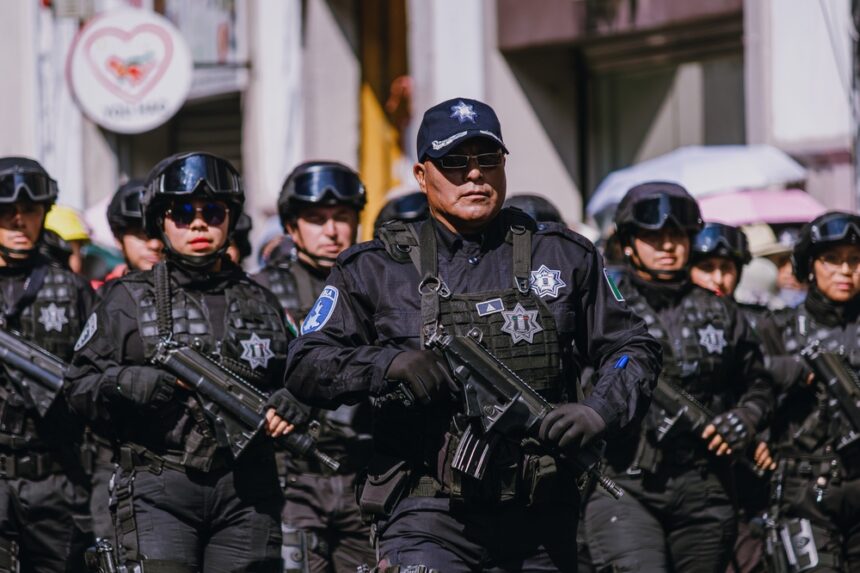
Under the security operation, soldiers will take over some fixed guard duties so that police are free to respond to unrest, Interior Minister Laurent Nuñez told lawmakers.
The government also pledged to change police tactics after widespread criticism that city centers had been left exposed during last weekend’s violence.
France has kept thousands of soldiers on patrol in public places since 2015 under an operation known as Sentinelle, launched after deadly terror attacks. The new security operation is expected to expand the military’s support role during the protests.
What did Prime Minister Sébastien Lecornu say?
Speaking in the National Assembly, Lecornu said restoring order was the immediate priority after rioting and looting hit Paris, Marseille, Lyon and other cities. Lecornu has led the government since being appointed prime minister in 2025.
He blamed violent groups on the far left, saying they had operated in swarms and used digital tools to spread violence in a methodical way.
Nuñez had earlier made a similar argument, blaming troublemakers, looters and activists on the far left, and acknowledging that police tactics must adapt to groups that move quickly.
How have opposition lawmakers responded?
Lawmakers on the left accused the government of ignoring anger over declining public services and the high cost of living. Some argued the government was using the violence to avoid a broader debate over economic policy.
The protests began with demands for economic relief and better schools before turning violent. Critics argue that a security operation alone will not address those grievances. Rising prices and strained schools and hospitals have fueled frustration in many French communities for years.
What happened during last weekend’s riots?
Violence targeted city halls, other public buildings and hundreds of businesses across France. In Lyon, rioters torched the city’s tourist office, and in Limoges, the spire of a historic town hall collapsed in flames. The damage was among the worst France has seen in years, and protests spread to parts of Europe.
Nuñez offered to resign, saying he was responsible, but President Emmanuel Macron refused to accept his resignation. Macron ordered full transparency about failures in planning and intelligence. Nuñez said authorities had lost control in some major cities that Saturday.
Paris imposed overnight curfews around Place de la République and Les Halles, and other cities banned gatherings or set curfews for minors. Authorities said the curfews were meant to protect people and property.
Why does the weekend security operation matter?
More protests are planned, and officials want to avoid a repeat of last weekend’s chaos. The security operation will be the first major test of the government’s new approach.
Paris is also set to host an NFL game Sunday between the Pittsburgh Steelers and the New Orleans Saints. The league has said the game will go on despite the unrest. The game is part of the league’s push to grow its international audience.
Deploying soldiers in support of police is a sensitive step in France, where the military’s domestic role has been debated since the 2015 attacks. Some critics worry about blurring the line between the military and civilian policing.
How well the security operation keeps the peace could shape public confidence in the government in the weeks ahead. Officials have not said how many troops will take part.