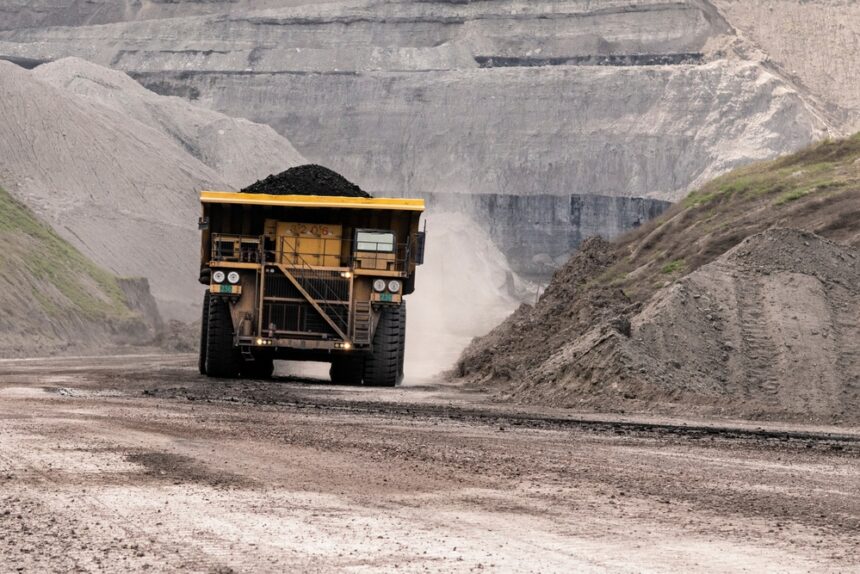
Australia’s High Court has found that approval for a 22 year extension of a coal mine in the Hunter Valley was invalid, because the planning body did not consider emissions produced when the coal is burned overseas.
What did the court decide?
That the approval was invalid, by a 3 to 2 majority, and that the matter returns to the New South Wales Land and Environment Court. That court must now consider either suspending the consent or setting terms that would make it valid. The extension is not cancelled, and conditional validation remains one of two available outcomes.
What are scope 3 emissions?
The carbon released when a product is used rather than when it is made. For a coal mine, scope 1 and 2 cover emissions from the operation itself, diesel in the machinery, electricity for the site. Scope 3 covers the coal being burned, usually in another country by another company. For the Mount Pleasant coal mine, one judge put scope 3 at roughly 98 percent of the project’s total emissions, about 860 million tonnes.
Why does that proportion matter?
Because of the mismatch it exposes. The judge noted that the planning commission imposed numerous conditions on the 2 percent of emissions arising directly from the mine and neither imposed nor discussed any conditions on the remaining 98 percent. An approval regulating the small share while ignoring the large one is what the majority found insufficient.
What did all five judges agree on?
That the lower appeal court got its reasoning wrong. The Court of Appeal had found the approval invalid on the basis that the commission needed to focus on climate effects in the local area. All five High Court judges rejected that approach, with the majority arriving at the same outcome by a different route through scope 3.
Why is that distinction important?
It narrows the ruling and strengthens it at once. A requirement to assess local climate effects would have been difficult to apply, since climate impacts are not geographically contained. A requirement to consider emissions from the product’s eventual use is a cleaner test and one applicable to any fossil fuel approval.
Does this travel beyond Australia?
Potentially. Courts in several jurisdictions have declined to require regulators to account for emissions occurring abroad, on the reasoning that another country’s combustion is another country’s responsibility. A finding that an approval fails without considering them is the kind of precedent litigants cite internationally, and the Mount Pleasant coal mine case will be read in that light.
What is the argument the other way?
That it is unworkable and displaces rather than reduces. Opponents of counting scope 3 argue a producing nation cannot regulate how another country uses a commodity, that demand simply shifts to other suppliers, and that it exports economic activity without lowering global emissions. Two of the five judges dissented, and the question is contested rather than settled.
What happens now?
The lower court decides between suspension and conditions. The practical question is what conditions on scope 3 emissions would even look like for a project whose output is burned abroad.