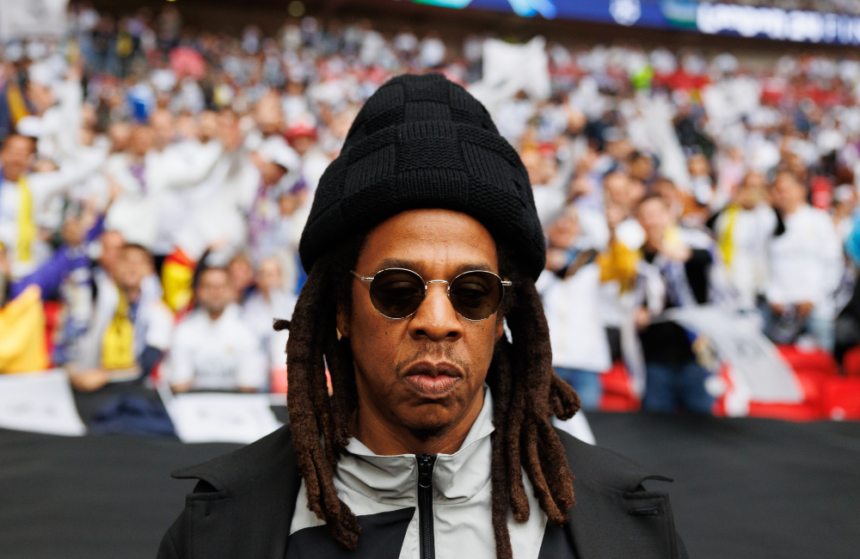
Long before the private jets, the sprawling art collections and a $200 million Malibu mansion reportedly purchased in cash, Shawn Carter was a kid in the Marcy Houses, a public housing project tucked inside Brooklyn’s Bedford-Stuyvesant neighborhood. That beginning did not simply shape the man who would become Jay-Z. It shaped the way he processes wealth, morality and the escalating national conversation about whether people like him should exist at all.
In a recent interview with GQ, Jay-Z took a firm and deliberate stand against the cultural and political groundswell targeting the ultrawealthy. His argument cut straight to the point. Framing billionaires as a class-level problem, he suggested, is a convenient way to avoid confronting the deeper structural failures that allow extreme wealth to accumulate in the first place. In his view, directing anger at the people at the top lets broken systems evade accountability entirely.
He also challenged the idea that money transforms a person’s fundamental character. Wealth may amplify certain tendencies, he acknowledged, but the core of who someone is was already present long before the money arrived. Morality, he argued, cannot be reduced to a number in a bank account.
A cultural moment with real stakes
His remarks arrived at a moment carrying considerable weight. A recent Pew Research survey found that roughly 18 percent of Americans about 1 in 5 believe it is morally wrong to be a billionaire. Among younger Americans, that figure rises to nearly 1 in 3. The sentiment has also migrated from opinion polling into active legislation. California is currently weighing a one-time billionaire tax, and federal lawmakers have introduced bills taking direct aim at the wealthiest Americans.
Jay-Z crossed the billionaire threshold in 2019, becoming the first in hip-hop history to do so. Forbes currently places his net worth at $2.8 billion, a portfolio built across music, spirits, venture capital and real estate. His wife, Beyoncé, joined him at that level in December 2025, making them one of the wealthiest couples anywhere in the world.
They share that distinction with a growing number of entertainment figures. Taylor Swift, Dr. Dre and Bruce Springsteen have all reached billionaire status, part of a broader shift in how generational wealth is now constructed in music and entertainment. Forbes counts 989 American billionaires today, the highest number ever recorded. Globally, billionaire wealth reached a record $18.3 trillion in 2025. Elon Musk, currently valued at approximately $827 billion following a shareholder approved compensation package, is widely projected to become the world’s first trillionaire.
Talent built against hard odds
What gives Jay-Z’s perspective its particular weight is that he did not arrive at wealth through inheritance or institutional advantage. He has spoken openly for years about what life inside Marcy actually required of him. The neighborhood existed in extremes pockets of community and warmth interrupted by sudden, violent loss, with little institutional support and almost no margin for error.
He has described those years as a strange and contradictory emotional landscape, where grief and celebration could arrive on the same block within hours of each other. What he carried out of that environment was not resentment but a relentless drive he still credits for everything that followed.
Importantly, his position is not that the system treated him fairly. He has been direct about the fact that he succeeded in spite of how the system is constructed, not because of it. What he resists is the conclusion that dismantling the people who managed to escape that system rather than dismantling the system itself constitutes progress worth celebrating.
Why he says outrage alone changes nothing
For Jay-Z, the billionaire debate only carries meaning if it produces something concrete. Public anger that never translates into structural reform, in his framing, is noise without consequence.
It is a perspective shaped not by distance from poverty but by intimate, firsthand knowledge of it which may be exactly why he believes the conversation is being aimed in the wrong direction.