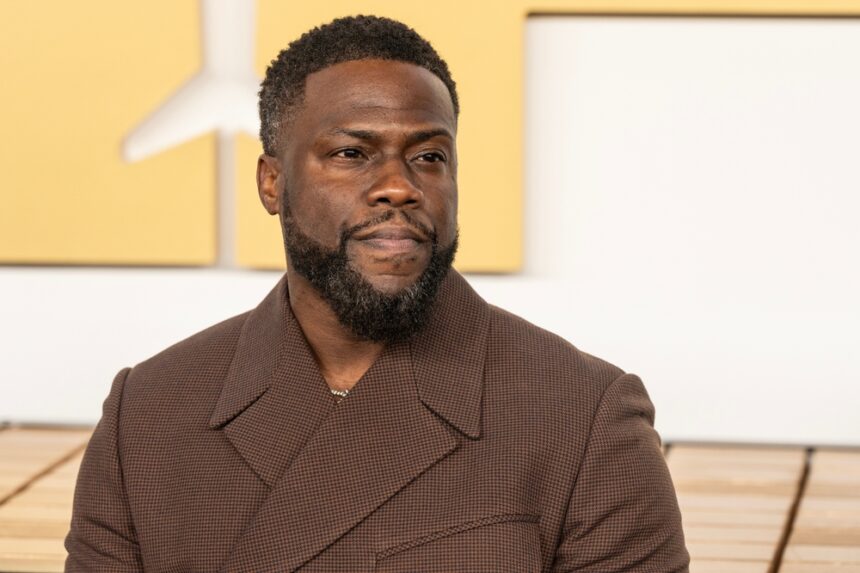
Two weeks after Netflix aired his live comedy roast, Kevin Hart sat down for his first public response to the controversy that followed. The special, which aired in early May, was intended as a celebration of Hart’s career through the format of sharp comedic ribbing from fellow entertainers. What it became was something more complicated, driven largely by a joke told by comedian Tony Hinchcliffe that referenced George Floyd’s death in a way that many viewers found deeply offensive.
Hart appeared on a nationally syndicated morning radio program on May 26 to address the fallout directly. The hosts pressed him on the moment almost immediately, and he did not avoid the subject. His response covered several distinct positions that together reveal how he is thinking about his role in what happened and what he believes he owes the public in response.
Kevin Hart on the joke itself
Hart acknowledged that the joke about Floyd was not tasteful, particularly for Black viewers and within the broader context of Black culture. He did not defend the content itself. What he did defend was the context in which it appeared, arguing that anyone familiar with the roast format and its history would understand that racial humor and extreme irreverence are central to how those events function. He pointed to previous Netflix roasts as evidence that this kind of material is not new to the format and that viewers who chose to watch were entering a space with established conventions.
When asked directly whether Hinchcliffe crossed a line, Hart declined to apply that judgment. He described Hinchcliffe in terms of consistency, suggesting the joke was in keeping with the comedian’s established style rather than a departure from it. He also noted, somewhat separately, that Hinchcliffe’s overall set was among the stronger performances of the evening, a comment that drew its own reaction.
Where Kevin Hart draws his own line
Hart was clear that he would not personally have told a joke of that nature. He drew a distinction between understanding why a comedian makes a particular choice within a specific format and endorsing that choice as something he would make himself. That separation, he suggested, is part of what it means to produce a live event featuring multiple performers with different voices and different approaches.
His broader defense of his role in the roast rested on that same logic. As the producer of the special, he argued that his job was to deliver a successful live production, and that intervening in real time to stop or redirect another comedian’s set was not something he agreed to do and not what the format requires. He framed any expectation that he should have done otherwise as a misunderstanding of what producing a roast actually involves.
The question of responsibility
Hart’s position is coherent within the logic he is applying, but it has not satisfied everyone. Critics have argued that attaching your name to a production as both its subject and its producer creates a different kind of accountability than simply appearing as a guest. The argument is that Hart had more control over the shape of the evening than a standard roast subject would, and that more control implies more responsibility for what aired.
That tension is unlikely to resolve quickly. Hart has been one of the most commercially successful comedians of his generation, and the roast was designed to mark that achievement. The fact that it is now primarily remembered for a different reason is something he will have to continue navigating in public, regardless of where he believes the line of personal responsibility falls.
For now, he has said what he came to say. Whether it lands as clarity or deflection will depend entirely on who is listening.