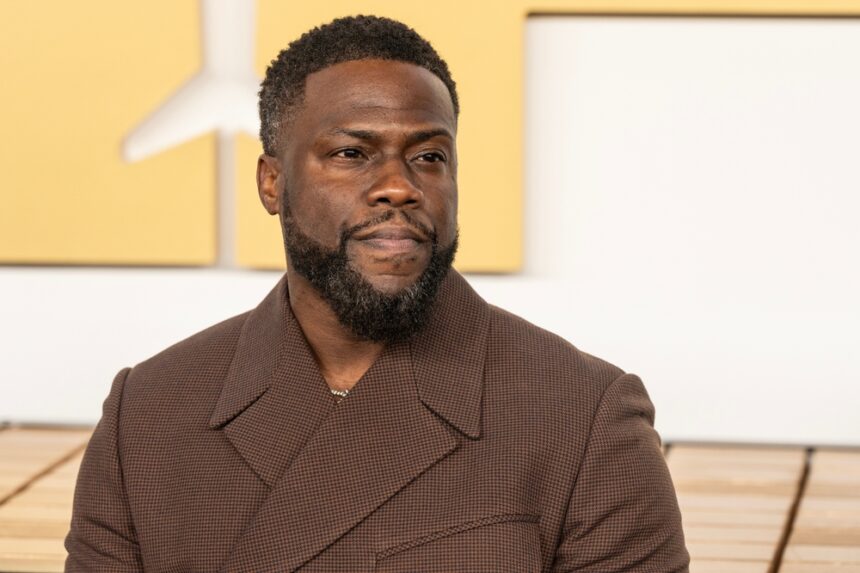
Kevin Hart is not apologizing for what happened at his Netflix roast, and he is not distancing himself from the comedian at the center of the backlash. In a candid interview this week, Hart addressed the controversy directly, defending the nature of roast comedy while making clear he wants his name removed from the ongoing public debate about the content.
The roast, which aired on Netflix, drew significant criticism following several jokes that many viewers found offensive, particularly material involving racial humor and references to George Floyd, the Black man killed by Minneapolis police in 2020. Hart acknowledged the sensitivity of the material while arguing that roast comedy operates under different standards that regular viewers of the format understand.
Hart on Hinchcliffe and the nature of roast comedy
Rather than condemn the set that generated the most controversy, Hart praised it. He described Tony Hinchcliffe as having delivered arguably the best or one of the best performances of the evening, placing him alongside Pete Davidson as a standout from the night. Hart made clear that he would not personally tell the kinds of jokes either comedian delivered, but said he understood their comedic styles and expected nothing different from either of them.
His defense was rooted in the format itself. Hart pointed to previous Netflix roasts as evidence that racially charged and boundary-pushing humor is a consistent feature of the genre, not an aberration unique to his event. He argued that anyone who chooses to watch a roast enters with an understanding of what the format involves, and that the audience for that kind of show accepts the premise going in.
Hart distances himself from the fallout
While Hart defended the performers, he was equally firm about his desire to be separated from the controversy itself. He described his response to the ongoing discourse as one of deliberate simplicity, saying the material was not his to own or answer for. He did not write the jokes, did not deliver them, and sees the production as something distinct from his personal views or comedic sensibility.
The interview came roughly a week after fellow roaster Chelsea Handler publicly criticized the material, calling out jokes by both Hinchcliffe and host Shane Gillis as racist and sexist. Handler took particular issue with a joke delivered by Gillis that referenced lynching, describing it as deeply offensive and fundamentally different from the kind of edgy humor she associates with the roast format. Gillis had noted during the live broadcast that the joke went through an extended deliberation process before being included.
A roast that divided more than it united
The Roast of Kevin Hart has sparked a debate that extends well beyond a single television event, touching on questions about what comedy is permitted to do, who gets to make that determination, and whether the roast format provides sufficient cover for material that would be considered unacceptable in any other context.
Hart’s position appears to be that the format speaks for itself and that viewers who engage with it do so knowingly. Whether that argument satisfies critics who believe some material crosses a line regardless of genre is a question the conversation has not yet resolved. For Hart, however, the matter is settled. He had his night, he enjoyed his roast, and he would like the rest of the debate to proceed without him.