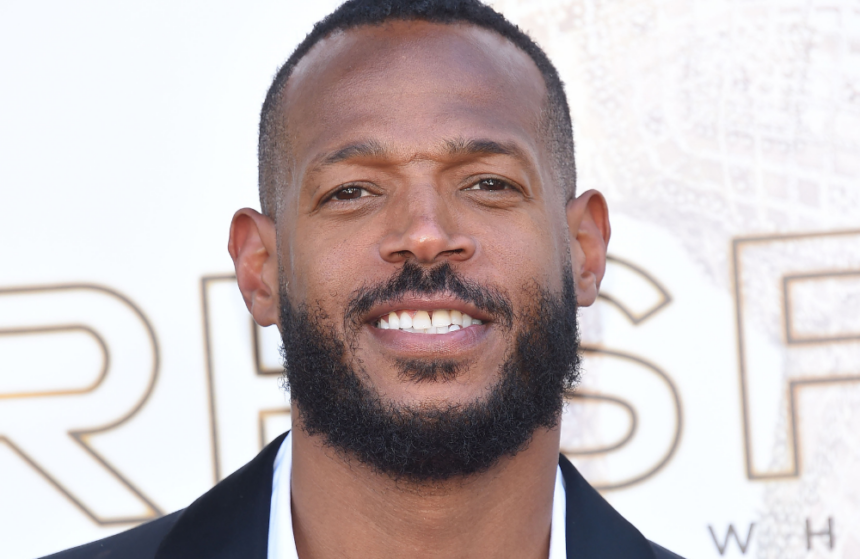
Marlon Wayans occupies an unusual position in a conversation that rarely leaves room for nuance. He is a close friend of Dave Chappelle, a comedian whose material about transgender people has drawn sustained criticism and sparked protests. He is also the father of a trans son named Kai, whom he announced publicly in late 2023 and has spoken about with evident pride and protectiveness ever since. In a recent interview, Wayans addressed how he holds both of those things at the same time, and why he does not see a contradiction in doing so.
Speaking to a major entertainment publication, Wayans explained that his friendship with Chappelle is grounded in a personal knowledge of the man that he believes the public does not have access to. He described Chappelle’s intent as different from what critics perceive, arguing that the comedy comes from a place of provocation rather than genuine malice. For Wayans, the distinction matters. He said he would not maintain a friendship with someone whose values were rooted in hatred, and that his continued closeness with Chappelle reflects his assessment that Chappelle does not fit that description.
What Dave Chappelle’s comedy has actually involved
Chappelle’s routines touching on transgender identity have included material that mocks pronoun usage, draws unflattering anatomical comparisons and aligns him, at least rhetorically, with ideological movements that advocate for the exclusion of trans women from certain spaces. The content has been criticized by LGBTQ advocacy organizations, led to employee protests at a major streaming platform, and has been referenced and amplified by political figures using it to advance policy positions Chappelle has since said he did not intend to support. He has expressed frustration at seeing his material used in that way, drawing a distinction between his comedic intent and how others have weaponized it.
Wayans, who understands comedy as a craft and a community, frames his defense of Chappelle through that lens. He sees the controversy as partly a clash between comedic sensibility and an audience that approaches certain subjects without room for irreverence. That perspective does not erase the harm the material has caused for many trans people and their families, but it explains how Wayans arrives at a different conclusion than Chappelle’s loudest critics.
Marlon Wayans as a father first
What makes Wayans’ position genuinely complicated rather than simply contradictory is what he has said and done for his son Kai. He announced Kai’s identity publicly on a radio program in 2023, using his platform to normalize the conversation and express unconditional support. He has since spoken about Kai with warmth and without qualification in multiple public settings.
He has also drawn a clear line between Chappelle’s comedy and what he considers straightforward bigotry. When another entertainer directed homophobic and transphobic language at Kai specifically, Wayans responded with sharp public criticism, making clear that personal attacks on his child operate in a different moral category than comedy that touches on identity in the abstract.
Marlon’s framework for holding both
Wayans described his role in this situation as someone positioned between two people he cares about, capable of explaining each to the other. He framed it as a matter of appropriating his feelings rather than suppressing them, maintaining love and loyalty toward both his friend and his child without requiring either to fully understand the other.
He was also direct about where his limits lie. He described transphobia, homophobia and racism as forms of hatred that he will not tolerate directed at his family. His support for Chappelle, as he has framed it, is not a concession to those views. It is a judgment about a friend’s character that he has made independently and stands behind, even knowing how that position looks from the outside.