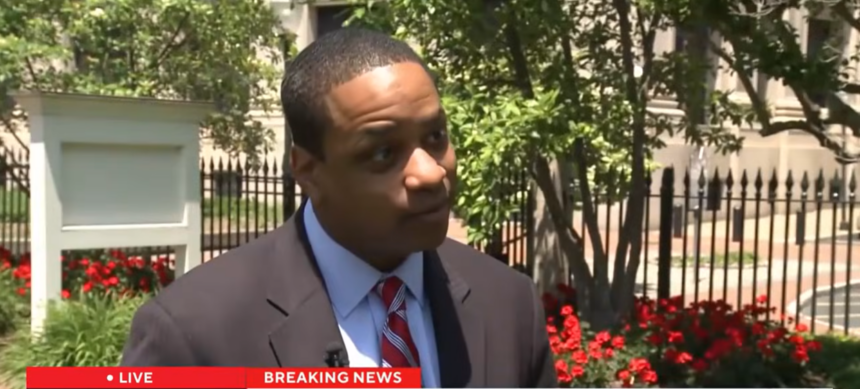
In the years leading up to the death of his wife, Cerina, former Virginia Lt. Gov. Justin Fairfax had built a visible and vocal record as an advocate against gun violence in the United States. He wrote about it on social media, wove it into his political platform and carried it into his private legal practice, where he represented the families of gun violence victims in lawsuits against Virginia’s state government and municipalities.
On Jan. 25, 2023, not long after leaving office and following a failed gubernatorial campaign, Fairfax took to Facebook to describe gun violence, particularly mass shootings, as a national health crisis that demanded urgent, compassionate action. He called for broader access to mental health care, stricter barriers to keep weapons away from those at risk of harming others, and a deeper reckoning with what he described as an internal brokenness driving people toward cruelty.
In a follow up post that September, he returned to the subject, expressing frustration at what he saw as political theater standing in the way of meaningful progress. He described American families as being decimated by the ongoing epidemic and called the lack of decisive action unconscionable.
The murder suicide that devastated a family
Those words now carry a painful and devastating weight. Shortly after midnight on Thursday, April 16, Fairfax fatally shot Cerina inside their home in Annandale, Va., then turned the gun on himself, according to authorities. The couple had been living in the same house while navigating what Fairfax County police described as a difficult and contentious divorce, occupying separate bedrooms during that period.
Their two teenage children, a son and a daughter, were inside the home when the shooting occurred. It was their son who called 911. Fairfax County Police Chief Kevin Davis addressed reporters about the incident, describing Justin as someone who had been considered a rising political figure and framing the tragedy as a profound fall from grace for a family that, from the outside, had appeared to have much working in its favor.
A political career marked by both promise and controversy
Fairfax served as Virginia’s lieutenant governor from 2018 to 2022, a tenure that began with considerable momentum and significant public attention. In 2019, however, his career was upended when two women came forward with sexual assault allegations stemming from incidents they said occurred in the early 2000s. Fairfax denied all wrongdoing and declined to step down, remaining in office through the end of his term before entering the 2022 Democratic gubernatorial primary, where he finished fourth.
The allegations against him had surfaced at a politically turbulent moment in Virginia, coinciding with widespread calls for then Gov. Ralph Northam to resign after photos emerged of him in blackface. Northam ultimately survived the fallout and completed his term. Northam, upon learning of the deaths of Justin and Cerina, expressed grief and said he and his wife were praying for the Fairfax children, Cameron and Carys, and the wider family.
Advocacy that extended beyond the campaign trail
Even after his time in office ended, Fairfax remained publicly engaged on the issue of gun violence. He had been a steady presence in advocacy efforts connected to the 2019 Virginia Beach mass shooting, in which 12 people were killed and four others wounded at a municipal building the second deadliest workplace shooting in U.S. history. He continued speaking out after subsequent tragedies as well, including a 2022 shooting at the University of Virginia.
In his private legal work, that advocacy took a direct and concrete form. He used his law practice to pursue legal action on behalf of families whose lives had been shattered by gun violence, squaring off against state and local government in court. The contrast between that body of work and the events of April 16 has left those who knew him and followed his career struggling to reconcile two deeply incompatible versions of the same man.