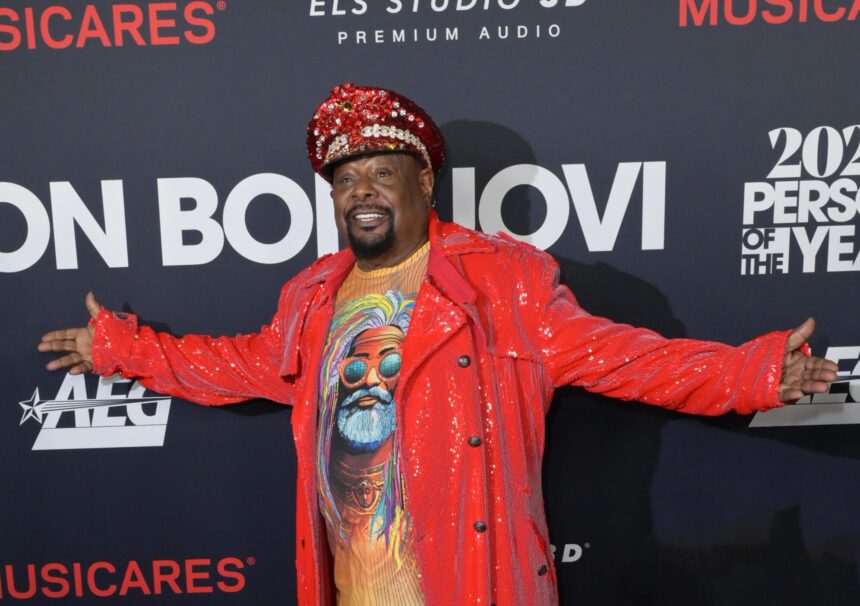
George Clinton, the founder of Parliament-Funkadelic and one of the most influential figures in the history of American music, has filed a federal lawsuit against UMG Recordings, alleging that the label improperly withheld more than $1.1 million in royalties tied to recordings spanning several decades. The complaint, filed in federal court in Detroit in mid-May, accuses UMG of freezing his payments entirely for more than three years and argues that the justification offered for doing so was legally insufficient.
At the center of the dispute is a separate legal matter involving the estate of Bernie Worrell, the late keyboardist who was a central figure in Parliament-Funkadelic’s classic era. Worrell’s estate had filed its own lawsuit alleging that Clinton withheld millions in profits generated by some of the group’s most enduring recordings. UMG responded to that litigation by placing a hold on the entirety of Clinton’s royalty payments, a decision Clinton now argues went far beyond anything the circumstances could legally justify.
George Clinton’s core argument
Clinton’s filing does not dispute that some portion of his royalties might have been legitimately subject to review during the Worrell estate litigation. His argument is that UMG’s response was wildly disproportionate. Rather than restricting payments tied to the specific recordings at issue in that case, UMG froze his entire royalty stream, cutting off income from recordings that had nothing to do with Worrell’s estate and were created under entirely separate agreements.
Among the examples highlighted in the complaint is Clinton’s independent production work with the Red Hot Chili Peppers. Those recordings were made years after Worrell’s involvement with Parliament-Funkadelic had ended, under contracts with no connection to the dispute at hand. Clinton argues that including them in the royalty freeze had no legal basis and caused him direct and measurable financial harm.
The withheld royalties cover recordings dating as far back as 1969 and extending into the 1990s, including Parliament-era albums, solo work and later collaborative projects. The breadth of the freeze, Clinton contends, was a breach of his contractual agreements with the label.
What happened to the Worrell estate case
The underlying litigation that UMG used to justify the royalty freeze has not gone in the estate’s favor. UMG and other music companies were dismissed from that case in 2023, removing them as defendants and effectively ending any direct liability the label might have faced in connection with the Worrell estate’s claims. A court subsequently ruled against the estate in 2025, though that decision is currently being appealed.
Clinton’s legal team argues that even before the court ruled, and certainly after UMG was dismissed from the case, there was no defensible reason to maintain a total freeze on his royalty accounts. The complaint characterizes the continued withholding as a breach of contract and describes the financial consequences as severe.
What George Clinton is seeking
The lawsuit asks for full payment of the withheld royalties, additional damages, accumulated interest and a comprehensive accounting of all activity connected to his royalty accounts during the period in question. The accounting request is significant because it suggests Clinton’s legal team believes the full picture of what was withheld may not yet be entirely clear.
The case arrives at a moment when the music industry’s treatment of legacy artists and their royalty agreements is under growing scrutiny. Clinton, who received a star on the Hollywood Walk of Fame in 2024, has spent more than five decades building one of the most sampled and celebrated catalogs in music history. His lawsuit positions this not merely as a financial dispute but as a matter of an artist’s right to the income his work has generated over a lifetime.