Iran has agreed to allow international nuclear inspectors back into the country, Vice President JD Vance announced Monday after marathon overnight negotiations at the Bürgenstock resort near Lake Lucerne in Switzerland, describing the development as the most significant achievement from the first formal round of talks held under the framework of the June 17 memorandum of understanding between Washington and Tehran.
Vance addressed reporters on June 22 after negotiations that stretched into the early hours of the morning, saying the talks had achieved several key American objectives and established a strong foundation for a final agreement. He described the nuclear inspection breakthrough as the element of the talks that produced the most excitement among the American delegation.
What the nuclear agreement means
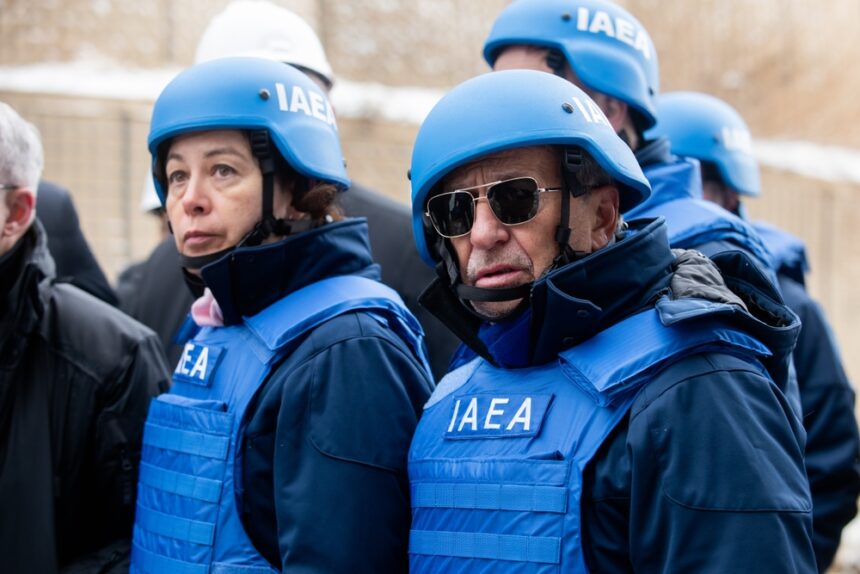
Iran’s agreement to invite inspectors from the International Atomic Energy Agency back into the country represents a concrete and verifiable step toward the denuclearization goals at the center of the memorandum. The IAEA conducts on-the-ground verification of nuclear facilities and materials, and its presence inside Iran had been significantly curtailed in recent years as relations between Tehran and Western nations deteriorated. Restoring that access was considered one of the most essential early tests of whether the peace process would produce meaningful results or remain symbolic.
Vance framed the development as the first step toward permanently ending Iran’s nuclear weapons program, placing it within the larger objective of the 60-day negotiating window that the memorandum established. He was careful to distinguish between the foundation the talks had laid and the final agreement that still needed to be built, using the analogy of a house under construction to convey that significant work remained ahead even as the initial progress was real.
Other advances from the Switzerland round
Beyond the nuclear inspections agreement, Vance said the talks produced movement on several other fronts that the memorandum had identified as priorities. Mechanisms to keep the Strait of Hormuz open going forward were among the issues addressed, an important structural question given that the waterway’s closure during the conflict had produced major disruptions to global energy markets and shipping.
The talks also addressed efforts to reinforce the Lebanon ceasefire, which had been achieved through separate mediation involving Qatar and the United States but remained fragile. Hezbollah’s close alignment with Iranian leadership means that any durable peace arrangement in the region depends in part on Iran’s willingness to use its influence to prevent further escalation in Lebanon.
Technical teams from the United States, Iran, Qatar, and Pakistan will continue negotiations in Switzerland in the days ahead, working through the more granular details of a roadmap intended to produce a comprehensive final agreement within the 60-day window.
A process that mediators described as encouraging
The Switzerland talks were the first high-level negotiations conducted under the formal framework established by the June 17 signing at Versailles. Qatar and Pakistan, which served as mediators throughout the conflict and in the talks leading to the memorandum, described the initial round as producing encouraging progress the day before Vance’s more detailed briefing confirmed what that progress consisted of.
The pace of advancement in the first round exceeded some expectations. The nuclear inspection concession in particular had been seen as a potential sticking point, given the sensitivity of the issue for Iranian domestic politics and the history of disputes over IAEA access. Its emergence as an agreed point in the opening round suggests both parties came to Switzerland prepared to move.
The 60-day clock continues.