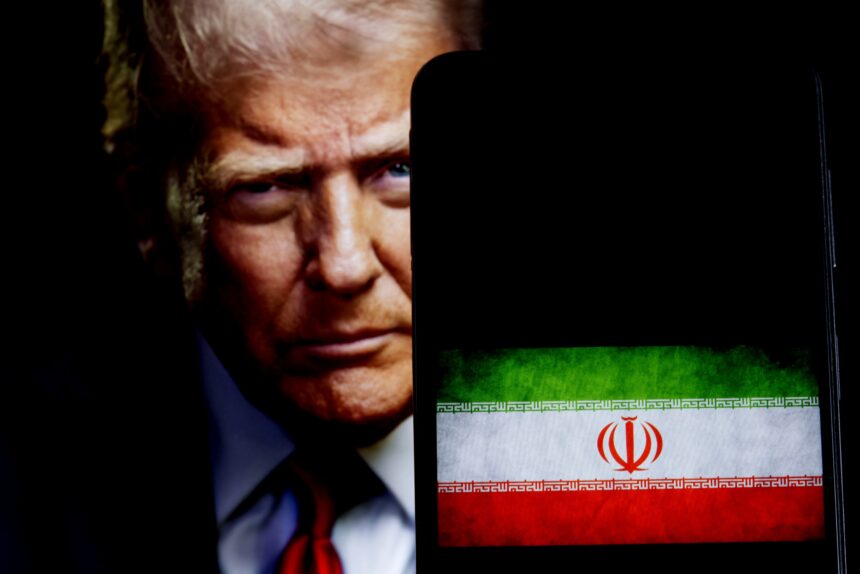
The war with Iran was supposed to last four to six weeks. It is now approaching its fourth month, and President Donald Trump is making clear he has no intention of letting a congressional election calendar dictate his timeline.
Speaking at a White House cabinet meeting on Wednesday, Trump addressed speculation that Iran’s leadership had been counting on midterm election pressure to force a faster resolution to the conflict. He rejected that framing entirely, signaling that concerns about the November elections would not accelerate his decision-making or push him toward a deal he did not consider satisfactory.
A message aimed directly at Tehran
The remarks were pointed and deliberate. Trump suggested that Iranian leaders had made a strategic miscalculation by assuming that domestic political pressure would eventually compel him to compromise. His position, at least as presented publicly, was that no such pressure exists or at minimum that he refuses to be governed by it.
The statement carries risk. Republican allies have already grown uneasy with earlier comments in which Trump appeared to minimize the economic burden the conflict has placed on American households. His cabinet meeting remarks on Wednesday are likely to deepen that unease, particularly among members whose own reelection prospects are tied to voter sentiment about the war’s costs.
Gasoline prices and political anxiety
The most tangible domestic consequence of the ongoing conflict has been energy prices. Gasoline costs have risen noticeably since the war began in late February, and that increase has translated directly into voter frustration. Republicans, who are widely expected to face significant headwinds in the battle to retain control of the House of Representatives and potentially the Senate, are acutely aware of how economic discomfort tends to move voters.
Trump’s public dismissal of those concerns is not uniformly welcomed within his own party. Several Republican lawmakers have privately and publicly expressed frustration that the administration’s messaging on the war’s economic impact has been inconsistent and at times counterproductive.
The Paxton primary and what it signals
Wednesday’s cabinet meeting also touched on the previous night’s Texas Republican Senate primary, in which Ken Paxton defeated incumbent Senator John Cornyn after receiving the president’s endorsement. Trump framed the result as an early indicator of broader midterm momentum for his wing of the party.
The outcome has drawn a more complicated reaction from party strategists. Paxton carries significant legal and personal baggage that Democrats believe makes the seat far more competitive than it would otherwise be in a state that has long leaned reliably Republican. Party officials are now recalibrating their assumptions about what was previously considered safe territory.
A president with other things on his mind
Beyond the Iran conflict and midterm politics, Trump also used the cabinet meeting to reference several construction and renovation projects underway in Washington, including work on the White House ballroom, updates to the Reflecting Pool and plans for a large architectural landmark in the capital. Some Republican lawmakers have suggested that the attention devoted to those projects reflects misplaced priorities at a moment when voters are primarily focused on economic conditions.
A review of Trump’s public statements over the past several months shows a pattern of increasing references to the capital’s physical transformation alongside his commentary on the war and domestic policy.
Where the conflict stands
The Iran war has moved through several phases since it began, and Trump’s public statements about its likely duration have shifted repeatedly. At various points he has suggested resolution was days away, only to subsequently indicate the conflict could extend considerably longer. The combination of military action, economic sanctions and ongoing diplomatic talks has created a situation where the endpoint remains genuinely unclear.
Trump’s message on Wednesday was simple. He is not in a hurry. And he wants Iran to know it.