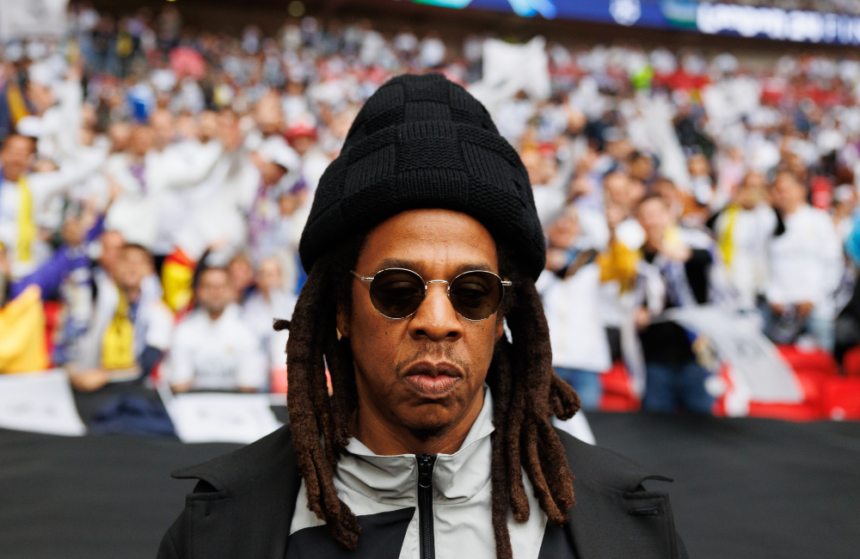
Jay-Z has done it again. Complex has stepped into one of hip hop’s most contested conversations and planted a flag, releasing its ranking of the 50 greatest New York rappers of all time and measuring artists across a wide set of standards including lyrical ability, songwriting, cultural influence and overall impact on the genre. At the very top of that list sits the Brooklyn icon himself, a result that is both defensible and already divisive.
The case for placing Shawn Carter above every other rapper to ever come out of New York rests on the sheer breadth of what he has accomplished. Technical skill, commercial dominance, global reach, personal brand, artistic evolution and sustained relevance across decades all factor into the argument. Complex’s position is that when every measure is applied simultaneously, no one else comes close.
The top 10 and what it says about New York rap
Rounding out the top five behind Jay-Z are The Notorious B.I.G. at number two, Nas at number three, Rakim at number four and LL Cool J at number five. The back half of the top 10 features 50 Cent at six, Nicki Minaj at seven, DMX at eight, Busta Rhymes at nine and KRS-One at ten.
The list gives each entry a signature hit, a deeper album cut worth knowing and a hometown designation that ties the artist to one of New York’s five boroughs. That geographic framing is intentional. New York rap has never been a monolith, and the borough-by-borough texture of the city has directly shaped how its artists sound, write and carry themselves. The ranking treats that context as part of the story rather than background detail.
Jay-Z’s path to the top was anything but guaranteed
What makes Jay-Z’s position on the list feel earned rather than automatic is the acknowledgment that his journey there was neither smooth nor inevitable. He has faced serious challenges to his legacy over the years, from artistic rivalries to public controversies, and has navigated each one without losing the cultural ground he built. If anything, those moments became part of what defines him as an artist and figure.
His ability to grow across multiple roles simultaneously, as a rapper, a businessman and a cultural institution, sets him apart in ways that go beyond hit counts or critical acclaim. The ranking treats that totality as the deciding factor.
Not everyone is celebrating the results
As with any definitive list, the reactions have been pointed. Azealia Banks took to social media to dispute her exclusion and challenge the placement of ASAP Rocky, who landed at number 40. Her response was sharp and direct, calling for the outlet itself to be held accountable for the omissions.
Max B had a more dramatic reaction upon learning he had not made the cut. During a conversation with Complex, he made clear that he considered his absence a serious oversight, ranked himself above the artists who had been included and exited the interview before it concluded. His frustration was visible and unfiltered.
A list built to start arguments
Complex’s ranking was never going to satisfy everyone, and that was almost certainly the point. Lists like this one serve as a starting point for a larger conversation about legacy, representation and what it actually means to be the best. New York rap has produced too many giants for any 50-slot ranking to feel complete, and the debate over who belongs and who was overlooked is already well underway.
Jay-Z sits at the top. The arguments about everything else are just getting started.