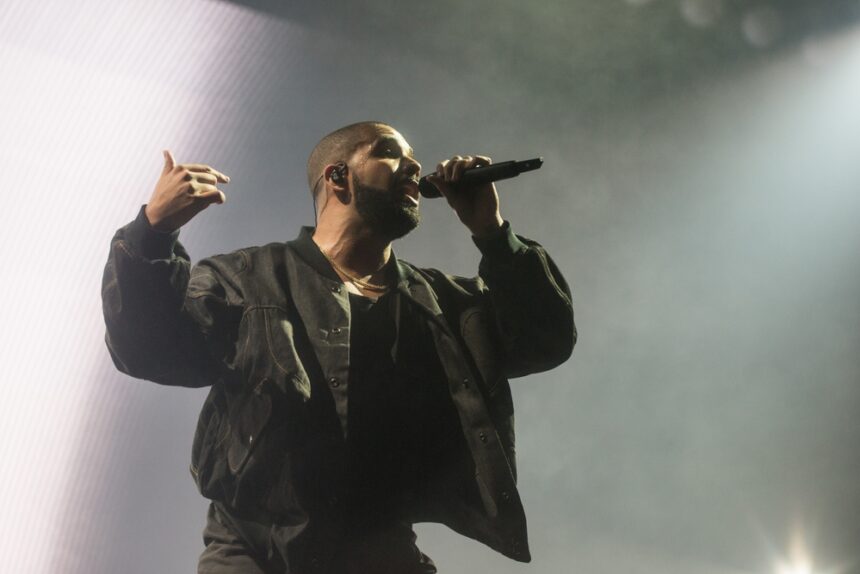
Drake is not moving. For the second consecutive week, Iceman sits at the top of the Billboard 200, and the numbers behind that hold are as impressive as the milestone itself.
The album generated 225,000 equivalent album units in the United States during the week ending May 28, with streaming accounting for the overwhelming majority of that total at 223,000 units. That performance was enough to keep Iceman at number one on both the Billboard 200 and the top streaming albums chart simultaneously, making it back-to-back weeks at the summit on both tallies. For an industry that increasingly measures success in opening-week explosions rather than sustained performance, the staying power of Iceman stands out as something worth paying attention to.
Drake and the Billboard 200 record that keeps growing
The second week at number one gives Iceman a distinction that only five other Drake projects have achieved. It is now his sixth album to hold the top position on the Billboard 200 for more than one week, a mark that reflects both the scale of his fanbase and the consistency with which his releases translate into sustained chart performance rather than a single dominant opening weekend followed by a sharp decline.
That kind of durability is increasingly rare in the streaming era. Most albums see their biggest numbers in the first 72 hours following release, driven by fan excitement, social media momentum, and playlist placement. The week two drop-off is often steep enough to raise questions about a project’s long-term commercial legs. Iceman has not followed that pattern. The numbers held, the audience stayed engaged, and the chart position remained unchanged, a combination that says something meaningful about how deeply the album has connected with listeners.
How Iceman arrived and what it brought with it
When Iceman first debuted at number one the previous week, it arrived with company. Two other Drake releases, Habibti and Maid of Honour, debuted at number two and number three respectively in the same chart cycle, making him the first artist in Billboard history to debut a project while simultaneously occupying all three of the top positions on the chart. It was a commercial statement that went beyond any individual album’s performance and spoke to the sheer volume of audience demand surrounding his releases at that moment.
That historic opening week set an almost impossible standard to maintain. Habibti and Maid of Honour have since settled lower on the ranking, dropping to the seven and eight spots as the initial surge around those projects leveled off. Iceman, however, held firm. Its ability to sustain the number one position while its companion releases declined is a meaningful distinction, suggesting that listeners have engaged with it differently and more deeply than the other two projects released in the same window.
Drake’s commercial consistency in a fragmented music landscape
What makes the Iceman run particularly notable is the context surrounding it. The music industry is more fragmented than at any point in its history. Streaming platforms have democratized access and made it possible for artists at every level to find audiences, but that same democratization has made it significantly harder for any single release to dominate the conversation for an extended period. Attention cycles move faster, playlists refresh constantly, and the next major release is always days away.
Against that backdrop, holding the number one position on the Billboard 200 for consecutive weeks requires more than a devoted fanbase. It requires an album that gives listeners a reason to keep returning rather than moving on. The streaming numbers for Iceman in its second week suggest it is doing exactly that, with 223,000 streaming equivalent units representing a volume of plays that most artists never achieve even at their commercial peak.
Drake has navigated the streaming era more successfully than almost any artist of his generation, consistently converting cultural moments into chart performance and maintaining commercial relevance across a career that has spanned multiple shifts in how music is consumed and measured. Iceman‘s second week at number one is the latest data point in that longer story, and for now, there is no indication that the run is finished.