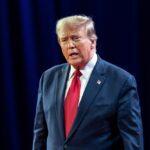
As President Donald Trump approaches his 80th birthday on June 14, 2026, questions about his physical condition and cognitive sharpness have moved from the margins of political commentary into mainstream debate. A pattern of moments during public appearances, each individually open to interpretation, has collectively fueled a conversation that the White House has struggled to fully contain. Supporters and critics are drawing opposite conclusions from the same footage, but the frequency of the incidents has made them harder to dismiss outright.
Throughout his second term, observers have noted awkward pauses during remarks, occasional apparent confusion, and video clips that have circulated widely on social media. The central question being asked, whether Trump retains the stamina and focus that the presidency demands, is one that neither side of the political divide has been able to settle definitively.
A White House event put Trump’s condition in the spotlight
The most recent episode to capture public attention occurred on May 18, 2026, during a Healthcare Affordability Event at the White House. Trump used the occasion to announce a new initiative designed to lower prescription drug costs through a platform called TrumpRx, with entrepreneur Mark Cuban and Health and Human Services Secretary Robert F. Kennedy Jr. among those appearing alongside him.
As the event proceeded and another speaker took the floor, Trump was observed appearing to struggle to keep his eyes open. Video of the moment spread quickly, with reactions ranging from genuine concern to pointed political commentary. Social media responses reflected the divided nature of the conversation, with some viewers raising questions about his physical stability and others arguing that fatigue alone was a sufficient and unremarkable explanation for what they were seeing.
Trump himself addressed a similar episode earlier this year when he acknowledged closing his eyes during a Cabinet meeting, framing it as boredom rather than drowsiness. That explanation did little to quiet the speculation.
Physical symptoms have added to the growing concern around Trump
The questions about Trump’s condition extend beyond energy levels. He has appeared in public settings where noticeable discoloration on his hands was visible, and photographs have shown swelling around his ankles. The White House has offered explanations for the hand discoloration, attributing it to the physical demands of frequent handshaking and minor incidental contact. The ankle swelling has drawn more sustained attention, with some medical observers pointing to chronic venous insufficiency as a possible underlying factor. The condition affects circulation in the legs and can produce discomfort and mobility limitations, though the White House has not confirmed any specific diagnosis.
Additional behavioral patterns have drawn scrutiny as well. Critics have pointed to extended, digressive passages in his speeches, inconsistencies in his recollections of personal and family history, and late-night social media posts that some observers have described as disjointed. The White House has consistently pushed back against the framing of these observations as indicators of cognitive decline, maintaining that the president is fully capable of meeting the demands of his office.
Trump’s upcoming physical exam carries unusual political weight
The timing of Trump’s next official health evaluation has taken on added significance given the current climate. A scheduled annual physical examination at Walter Reed National Military Medical Center on May 26, 2026, will be closely watched by members of both parties, as well as by a public that has grown increasingly attentive to the question of presidential fitness.
The White House has stated unambiguously that Trump is neither too old nor too ill to serve, and the formal examination is expected to be presented as confirmation of that position. Whether the results of that examination satisfy those raising concerns remains to be seen. Presidential physicals, while official, have historically offered limited detail and are not universally regarded as comprehensive assessments of cognitive or overall health.
What is clear is that the conversation is not going away. As Trump moves closer to a milestone birthday in one of the most demanding jobs in the world, the scrutiny of his public presence will only intensify in the weeks ahead.