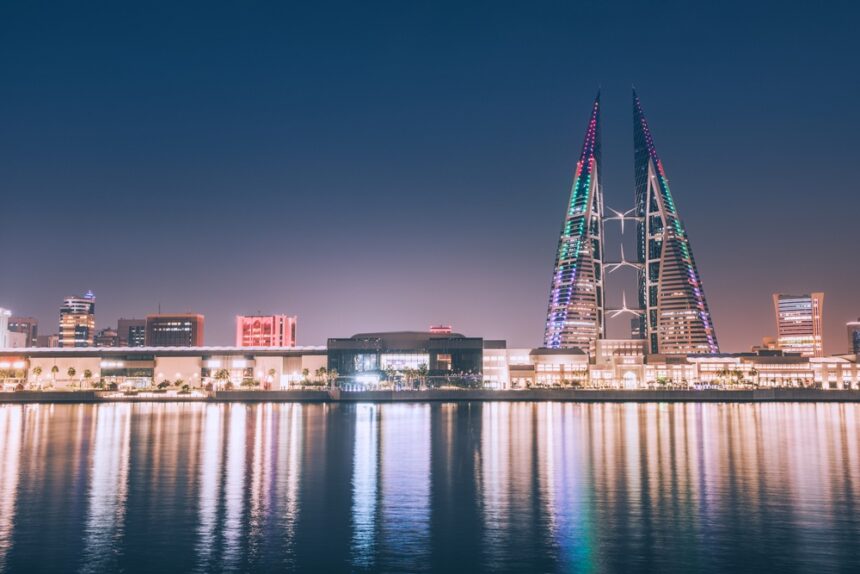
Americans in Bahrain received an urgent warning from the U.S. Embassy in Manama on Monday, with officials alerting citizens that Iran may be planning to target locations in the central part of the capital city and urging immediate caution.
The embassy said it had received information suggesting that unspecified sites in central Manama could be targeted, though it did not provide further detail about the nature or timing of any potential threat. American citizens living in or visiting the small island nation were told to remain vigilant, monitor guidance from the embassy and follow instructions from Bahraini local authorities as the situation develops.
The warning carried specific instructions for what Americans should do if they hear a loud explosion or if sirens are activated in their area. Those indoors were directed to move immediately to the lowest level of their building and to position themselves near interior walls, away from windows and exterior openings. Those caught outside were advised to seek shelter in a hardened structure without delay and, if no such structure is available, to lie flat and protect their head with their hands.
Falling debris poses its own risk
The embassy also addressed a threat that often goes overlooked in discussions of missile and drone attacks. Even when an incoming projectile is successfully intercepted by air defense systems, the debris from that interception can fall unpredictably and at high speed. Officials warned that this debris poses a significant risk to anyone exposed outdoors and that interception alone does not eliminate the danger for people on the ground below.
The guidance reflects lessons drawn from regional conflicts in which air defense systems have become increasingly active. In those environments, civilians have discovered that the sound of an interception is not necessarily an all-clear signal. The debris field from a destroyed drone or missile can spread across a wide area and cause serious injury or property damage even when the original threat was successfully neutralized.
Bahrain’s strategic position
Bahrain is a small island nation in the Persian Gulf with significant strategic importance in the region. The country hosts the U.S. Navy’s Fifth Fleet, which oversees American naval operations across the Middle East, the Red Sea and surrounding waters. That presence makes Bahrain a meaningful and high-value node in the broader American military posture in the Gulf and a potential point of interest for adversaries seeking to pressure or signal opposition to American activities in the region.
Iran and the United States have maintained a tense and at times volatile relationship for decades, and the current period of elevated military activity in and around the Strait of Hormuz has added urgency to diplomatic and security concerns across the Gulf. American officials have been monitoring the situation closely, and Monday’s Bahrain embassy warning reflects a specific and credible enough concern to warrant public communication to American citizens on the ground.
What Americans should do
The embassy’s guidance is consistent with standard U.S. government emergency communication protocols in high-risk environments. Americans in Bahrain are encouraged to register with the embassy through the Smart Traveler Enrollment Program, which allows the government to send alerts and to account for citizens in the event of an emergency.
Those who have not already taken basic preparedness steps are being advised to identify the nearest shelter locations relative to their home, workplace and frequently visited areas. Knowing in advance where to go if sirens sound or an explosion occurs can significantly reduce the time it takes to reach safety. For Americans who are in Bahrain for business or leisure travel rather than long-term residency, the same principles apply, and awareness of local emergency procedures should be treated as a baseline precaution in the current environment.
The embassy said it will continue to update its guidance as the situation evolves.