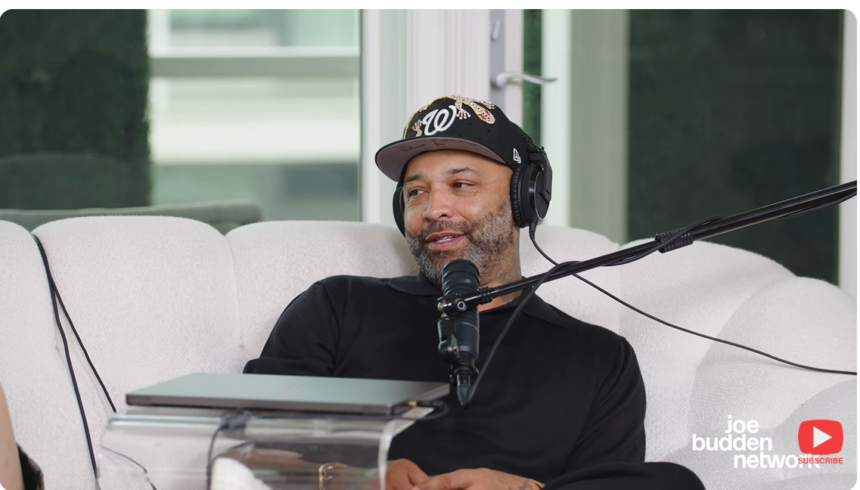
The growing anticipation around ICEMAN has found a clear voice in Joe Budden. On The Joe Budden Podcast, he framed the discussion not as simple excitement, but as a test of direction for Drake.
Budden’s perspective carries influence because it reflects both fandom and critique. He has followed Drake’s evolution closely, making his expectations feel less like speculation and more like a measured response to the artist’s trajectory.
Budden and the weight of expectation
At the center of Budden’s commentary is a clear demand for originality. The expectation is not just for a strong album, but for one that moves beyond familiar patterns. For an artist with a catalog as extensive as Drake’s, repetition risks dulling impact.
His stance mirrors a wider conversation within hip hop. Longevity often brings pressure to reinvent without losing identity. In this case, ICEMAN is being positioned as a moment where that balance must be achieved.
His viewpoint suggests that delivering more of the same may not satisfy listeners who have grown alongside Drake’s music.
Budden reacts to the 40 connection
One detail that shifted Budden’s tone was the possibility of Noah 40 Shebib returning to the fold. That collaboration has historically shaped Drake’s most recognizable sound.
For him, this is not just a nostalgic reunion. It raises the stakes. The expectation becomes sharper because the foundation is already proven. If that chemistry returns, the result is expected to feel intentional, not recycled.
This is where his analysis becomes more pointed. A familiar partnership can either refine an artist’s voice or trap it in repetition. The outcome depends on how that collaboration evolves.
Budden sees ICEMAN as a response
Budden’s framing also places ICEMAN within a broader context. Drake’s recent experiences, both personal and professional, have kept him at the center of industry conversations. That visibility creates an expectation that the music will reflect those moments.
Rather than focusing on spectacle, he leans into substance. The idea is that the album should carry a sense of progression shaped by real experiences. Without that, the project risks feeling disconnected from the moment it arrives in.
This expectation turns the album into more than a release. It becomes a response to everything surrounding it.
Budden and the rollout narrative
Even the album’s unconventional rollout has been pulled into Budden’s orbit of analysis. The dramatic reveal of the release date through an installation in Toronto adds intrigue, but it also raises questions about what lies beneath the presentation.
For Him, the spectacle matters less than the outcome. A creative rollout can build anticipation, but it does not guarantee substance. The focus remains on whether the music justifies the attention.
This distinction reflects a broader skepticism toward hype driven releases. The conversation shifts from how the album is introduced to what it ultimately delivers.
Budden shapes fan expectations
As fans react online, Budden’s commentary continues to shape the tone of the conversation. His perspective introduces a level of scrutiny that goes beyond excitement. It encourages listeners to think critically about what they expect from Drake at this stage of his career.
That influence is subtle but significant. It reframes anticipation as evaluation, turning the release into something to be measured rather than simply enjoyed.
A defining moment through Budden’s lens
Through his analysis, ICEMAN takes on added weight. It is no longer just another album in Drake’s catalog. It becomes a point where past success, present pressure and future direction intersect.
The expectation is clear. The project must feel fresh while maintaining the qualities that built Drake’s reputation. That balance is difficult to achieve, and his commentary makes that challenge impossible to ignore.
As the release date approaches, the conversation continues to build around that tension. Budden has set the tone, and now the focus shifts to whether the music meets it.