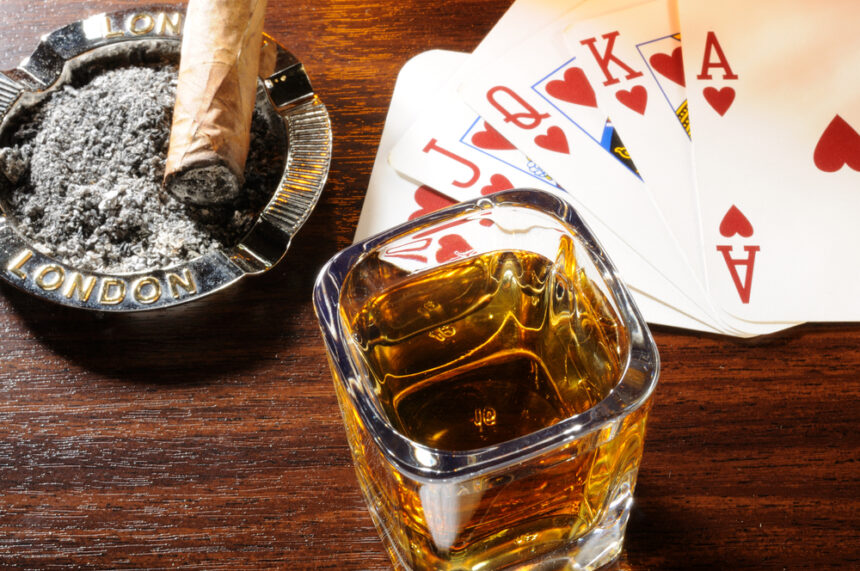
There is a certain kind of evening that needs no agenda. No notifications, no timelines, no background noise demanding your attention. Just a well-poured glass of whiskey, a hand-rolled cigar resting in an ashtray, and the quiet understanding that the next hour belongs entirely to you. This is not a trend. It is a tradition — one rooted in community, craft, and the kind of slowness that modern life rarely permits.
Whiskey and cigar culture has long been a cornerstone of after-hours ritual among those who take their leisure seriously. What once played out in dimly lit lounges and backroom card games has evolved into a refined practice celebrated by enthusiasts worldwide. The pairing is not accidental — whiskey and cigars share a sensory language built on smoke, oak, sweetness, and time.
Why Whiskey and Cigars Work Together
The chemistry between a quality whiskey and a well-constructed cigar is more intentional than it appears. Both are aged. Both carry the fingerprints of their environment — the terroir of the tobacco leaf, the char of the barrel. When paired thoughtfully, each enhances the other, softening edges and deepening the overall experience.
A few principles guide the best pairings
- Full-bodied, peaty Scotches pair well with darker, maduro-wrapped cigars that can hold their own against smoke-forward drams.
- Sweeter bourbons — think caramel and vanilla forward — complement medium-bodied cigars with a natural Connecticut wrapper.
- High-rye expressions bring spice that cuts through creamy, buttery smoke profiles, creating a pleasant contrast.
- Aged rums, while not whiskey, often enter the conversation as a third option for those who prefer their smoke sweeter and their glass just as warm.
The Whiskey Culture Built Around the Table
Long before whiskey became a collector’s obsession, it was a social currency. Card tables, jazz clubs, barbershops after hours — these were the original tasting rooms. The ritual of pouring a round, passing the cutter, and settling into a long conversation is a cultural inheritance that refuses to be retired.
That heritage remains very much alive. Cigar lounges across major cities have seen a quiet resurgence, drawing in a new generation of enthusiasts who want something more deliberate than a quick cocktail. They want the ritual. The weight of a proper rocks glass. The resistance of a cold cigar before it warms up. The moment when the first draw finally settles in.
How to Build Your Whiskey Ritual at Home
You do not need a walk-in humidor or a rare single malt to get started. The entry point into this world is more accessible than its reputation suggests. Here is what a strong foundation looks like
- Start with a reliable bourbon — something in the $35–$60 range with good complexity. Brands like Buffalo Trace or Four Roses Small Batch offer approachable depth without demanding a premium.
- Invest in a small desktop humidor — even a 25-count box is sufficient for most casual enthusiasts. Maintaining 65–70% relative humidity keeps your cigars in optimal condition.
- Choose a medium-bodied cigar to start — look for a robusto or toro format. Avoid ultra-strong cigars early on; the point is enjoyment, not endurance.
- Use a proper cutter and torch lighter — the tools matter more than people admit. A clean cut and an even light are the difference between a frustrating smoke and a transcendent one.
- Sip slowly, smoke slower — a quality cigar should last 45 minutes to an hour. Let it rest between draws. Treat the glass the same way.
Whiskey Picks Worth Knowing
Not every bottle deserves the ceremony, but the following have earned their place on the pairing table
- Maker’s Mark — smooth, wheated bourbon that pairs gently with lighter cigars.
- Ardbeg 10 — intensely peated Scotch for those who want their evening to arrive with force.
- Wild Turkey 101 — high-proof, bold, and unfussy. Built for the long evening.
- Redbreast 12 — Irish single pot still that bridges bourbon sweetness and Scotch complexity.
The Ritual Is the Point
Whiskey and cigars have always signified something beyond the products themselves. They are markers of deceleration — a conscious decision to step outside the velocity of daily life and occupy a moment fully. Whether it is a Friday night on the porch, a postgame wind-down, or a quiet celebration with the people who matter most, the ritual carries its own weight.
What makes the pairing endure is not exclusivity. It is the invitation. The unspoken agreement that whoever sits down at that table is welcome to stay as long as the glass is full and the smoke is still rising. That is the culture. That is the tradition. And it is not going anywhere.