John Calipari has been in this position before. He coached Shai Gilgeous-Alexander before anyone was sure how good Gilgeous-Alexander would become. He coached Tyrese Maxey, Derrick Rose, John Wall, Devin Booker, Jamal Murray and De’Aaron Fox at various points in his career, and in each case he understood what he was watching before most of the league did. When he goes to bat for a player in public, it is not a routine endorsement.
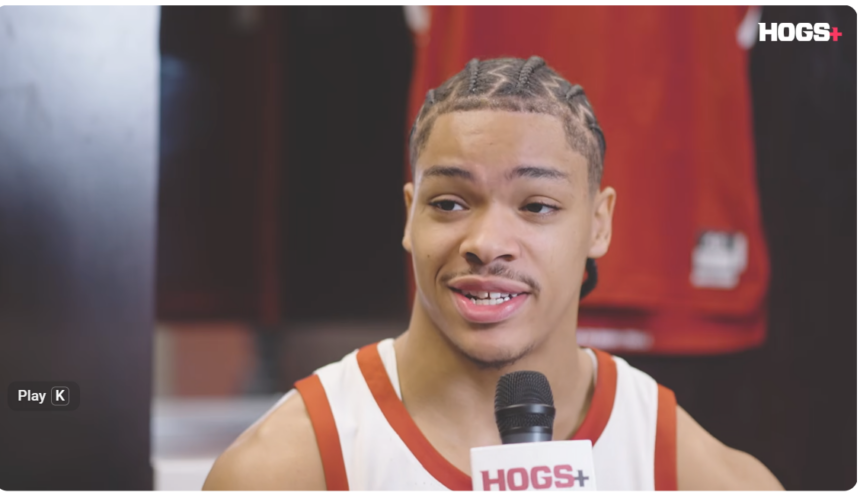
Before Arkansas faced Arizona in the Sweet 16 in San Jose, Calipari sat with Andscape’s Marc J. Spears and delivered a direct warning to NBA front offices about freshman guard Darius Acuff Jr. The message was that passing on Acuff would be a decision teams would come to regret, the same framing Calipari used for Gilgeous-Alexander and Maxey before they became stars.
A freshman season that did not look like one
Acuff finished his only college season averaging 23.3 points, 6.5 assists and 3.1 rebounds per game while shooting 44.6% from three-point range. Those numbers made him one of the most prolific freshman scorers the NCAA has seen in recent memory. He was named a unanimous First Team All-American, SEC Player of the Year, SEC Rookie of the Year and SEC Tournament MVP.
The postseason pushed those numbers even higher. Across five tournament games, Acuff averaged 30.2 points, including a 36-point performance against High Point in the second round on March 21. In the Sweet 16 loss to Arizona, a 109-88 final, he finished with 28 points, three rebounds and three assists. The game was not close. His performance was.
At 6’3″ and 190 pounds, Acuff does not overwhelm opponents physically. What he does instead is shoot efficiently, create for others at a rate that freshman guards rarely sustain and compete on stages that tend to reduce younger players. The combination is what has moved him up draft boards over the past several weeks.
The Detroit chip that never went away
Acuff, 19, told Andscape during tournament week that being overlooked was nothing new. Growing up in Detroit, playing at a smaller high school in a market that does not generate the same recruiting attention as other cities, he learned early to use neglect as fuel rather than let it become an excuse.
He described always being the smallest player in his age group, always having to show up at big moments without the benefit of hype preceding him. The pattern carried into his college season, where even after assembling one of the more decorated freshman resumes in recent SEC history, he said he still felt the recognition lagged behind what he had actually done. His response was the same as it had always been.
Where the draft conversation stands
ESPN’s Jeremy Woo projected Acuff as the seventh overall pick on March 11. In the weeks since, his stock has climbed. One NBA general manager told Andscape that he views Acuff as the top guard in the class and the third-best overall prospect, behind BYU forward AJ Dybantsa and North Carolina forward Caleb Wilson. A Bleacher Report mock draft by Jonathan Wasserman projects him fifth overall to the Utah Jazz.
The Jazz already have frontcourt depth with Lauri Markkanen, Jaren Jackson Jr. and Ace Bailey. A lead guard who can shoot off the dribble, facilitate at a high level and defend with consistent effort would address a genuine need on that roster.
What one season actually proved
Calipari described Acuff as unique, a word he does not typically reach for when talking about draft prospects. The distinction he was drawing is between players who have good college seasons and players who do things in college that translate directly to what NBA teams need. Acuff’s assist numbers, shooting percentages and postseason scoring average together make a case that belongs in the first category.
He came to Arkansas for one year and treated every game like an audition he had been waiting his whole career to get. The NBA will be the next stage. Based on everything that came before it, expecting him to feel out of place there would be a mistake.