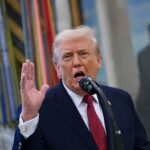
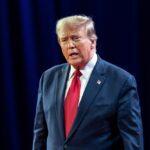
President Donald Trump took his economic defense on the road Thursday, appearing at a Las Vegas event where he pushed back against a recent government inflation report while urging Americans to stay patient as the country navigates the financial ripple effects of its conflict with Iran.
The Labor Department’s latest figures showed a 0.9-point jump in the consumer price index last month, the steepest single-month increase in nearly four years. The surge was driven largely by rising energy costs, a direct consequence of disruptions to global oil markets stemming from the war with Iran. Trump did not dispute the numbers outright but argued that the spike does not reflect the true state of the economy, characterizing the energy-related increase as a temporary and misleading distortion rather than a sign of deeper structural problems.
Energy markets and the Iran conflict
The connection between the war and rising costs at the pump is not subtle. At the end of March, Iranian counterstrikes in the Gulf region effectively closed the Strait of Hormuz, one of the world’s most critical oil trading corridors. The closure sent the price of international benchmark Brent crude oil sharply higher, sending shockwaves through energy markets globally.
Some relief arrived last week when Trump announced a temporary pause in the fighting as diplomatic peace talks got underway. Markets responded, and energy prices began to ease. The administration has consistently framed any cost increases tied to the conflict as short-term pain with long-term strategic payoff, and Trump reiterated that message Thursday, telling the crowd to watch developments over the coming days and weeks before drawing conclusions.
The no-tax-on-tips law takes center stage
The Las Vegas roundtable was organized primarily to celebrate the administration’s signature tax relief measure for service workers, a policy that eliminated federal taxes on tips for more than 60 categories of service industry jobs. The provision was passed as part of the One Big Beautiful Bill Act last year and has since become one of the administration’s most visible domestic accomplishments.
The timing and location were deliberate. Las Vegas is home to roughly 180,000 tip-dependent workers in the casino, hospitality and restaurant sectors, making it one of the cities with the most to gain from the law. Workers covered under the act can also claim deductions of up to $25,000 in tips annually, provided their salary falls below $150,000. The deduction phases out incrementally for higher earners, and additional benefits apply to overtime hours.
Trump told the crowd that more than 26 million Americans have already claimed the benefit, framing it as one of the most consequential tax changes in recent memory. Treasury Secretary Scott Bessent, Senator Tommy Tuberville of Alabama and Nevada Lieutenant Governor Stavros Anthony were among the officials present at the event.
Industry reaction is mixed
The law drew widespread praise from major industry groups when it passed. The National Restaurant Association celebrated the measure as a meaningful step toward putting more money in the hands of hourly workers and helping restaurant operators attract and retain staff.
Not everyone is satisfied, however. The Independent Restaurant Coalition has raised concerns that the regulations as written leave out a significant portion of workers who receive service charges or automatic gratuities rather than traditional tips. The group has formally urged the Treasury Department to broaden the definition to ensure more workers can access the deduction and has warned that without changes, the policy may fall short of its intended reach.