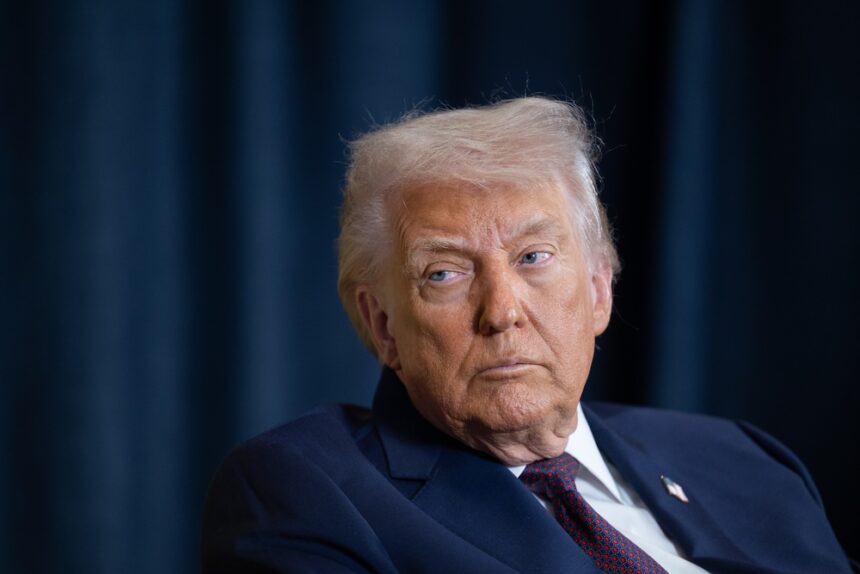
President Donald Trump named Canada as the worst of several countries he says have taken economic advantage of the United States, in remarks on Sept. 30 that come six weeks after trade talks between the two governments collapsed.
What did he say?
That Canada took advantage of the United States economically for years and is now being taught a lesson. He described his administration as reversing policies that allowed other countries to build cars and sell them into the American market, listing South Korea, Mexico, Japan and Canada, and singling Canada out as the worst. The comments came at a White House event marking Hispanic Heritage Month rather than at a trade announcement.
Where do negotiations stand?
Nowhere, since Aug. 21. Talks collapsed on that date with each government blaming the other for late demands the other would not accept. Ottawa’s position is that Washington is responsible for the absence of an agreement. No resumption has been announced.
Why do cars sit at the centre of this?
Because the two industries are not separate. Vehicles and components cross the border multiple times during assembly, and the sector has operated as an integrated North American system for decades under successive trade agreements. That structure means a tariff aimed at Canadian vehicles raises costs for American manufacturers using Canadian parts and for Canadian plants using American ones. Disentangling it is slower and more expensive than the framing of cars built elsewhere suggests.
What does the trade relationship actually look like?
Large and close to balanced outside energy. Canada is among the largest trading partners of the United States, and a substantial share of what crosses the border is intermediate goods rather than finished products for consumers. Deficit figures in the relationship are driven heavily by oil and gas, which the United States buys in volume and at a discount to world prices.
How is Canada responding?
By assigning responsibility rather than conceding. The Canadian position has been that the failure to reach a deal rests with the American side. Beyond that, the available account does not indicate any new retaliatory measure or policy shift following these remarks.
Does the rhetoric signal policy?
Not necessarily. These were remarks at an unrelated event rather than an announcement, and no new measure accompanied them. What they indicate is that the Canada US trade dispute is not moving toward resolution, which matters more than the specific language used.
Who feels this?
Workers and buyers on both sides. Auto employment in the Great Lakes region and in Ontario depends on the same supply chain, and tariff costs on vehicles and parts reach consumers through prices. A prolonged stalemate has a measurable cost that neither government’s framing captures.
What should be watched?
Any resumption of talks, any new tariff action on vehicles or parts, and whether the dispute broadens beyond autos. Nothing in these remarks changes any of those.