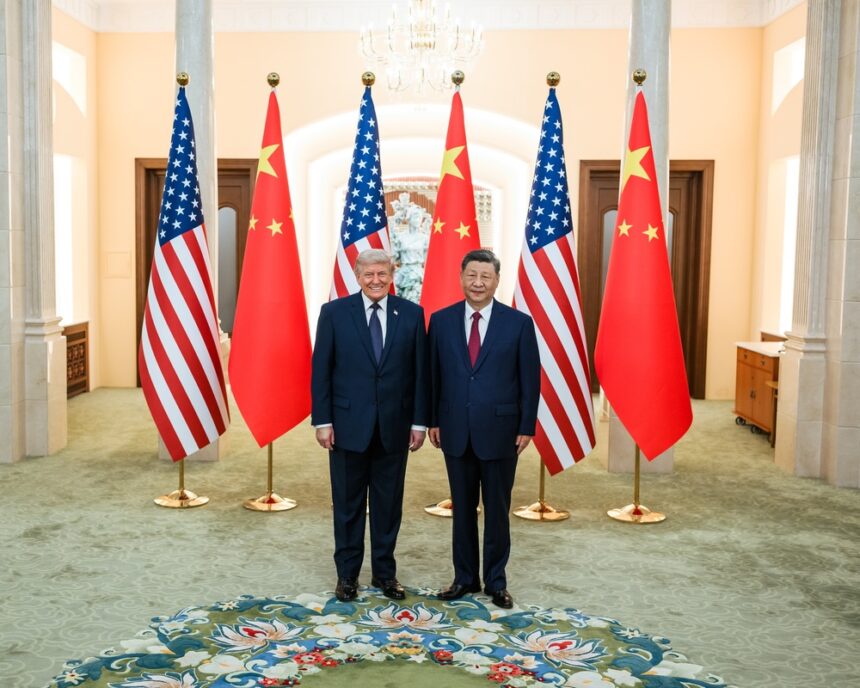
President Donald Trump welcomed Chinese leader Xi Jinping to Washington on Sept. 23 for a two day summit, with a pair of expiring arrangements giving the meeting a deadline that neither side set.
What is on the agenda?
Rare earth shipments, trade frictions and tensions surrounding Taiwan, according to the available account. No outcomes have been announced, and a two day format means substantive results, if any, arrive at the end rather than the start.
What expires on Nov. 10?
Two things at once. Beijing’s suspension of rare earth export controls and the broader tariff truce between the two countries both lapse on that date. Whether the Trump Xi summit produces an extension is the single question with concrete consequences attached, and it is the one worth tracking through the week.
Why do rare earths carry this much weight?
Because of processing rather than deposits. Rare earth elements are not geologically scarce, but China controls the overwhelming majority of global refining capacity, and building alternatives takes years and substantial capital. The materials are essential to electric vehicles, wind turbines, semiconductors, defence systems and consumer electronics. An export restriction reaching into those supply chains affects manufacturing well beyond anything most consumers would connect to a trade dispute.
What leverage does each side hold?
Different kinds. Beijing’s advantage in refining is immediate and difficult to route around in the short term. Washington’s is market access and technology restrictions, particularly on advanced semiconductors, which constrain Chinese capability over a longer horizon. Neither pressure point resolves quickly, which is part of why these arrangements keep being extended rather than settled.
What criticism has the visit drawn?
Some critics have objected to hosting the visit at all, citing China’s human rights record and its support for Iran. A Republican senator criticised the scale of the arrival ceremonies specifically, and the secretary of state defended the state visit. That disagreement is about protocol and symbolism rather than negotiating substance, though the two are not entirely separable in diplomacy.
Where does Taiwan fit?
Uncertainly. It is listed among expected topics, but Beijing has historically preferred to address Taiwan bilaterally and quietly rather than in settings that invite public American commitments. Any characterisation of what was said on it before the summit concludes should be treated cautiously, particularly given how much pre summit reporting on this meeting relied on anonymous sourcing.
What would count as a result?
An extension of the Nov. 10 arrangements, most plainly. Beyond that, a framework establishing regular channels and a schedule for further talks would be the realistic ceiling. Summits of this kind rarely resolve underlying disputes and more often produce a structure for managing them.
What should be watched as it closes?
Whether a joint statement emerges, since its absence would indicate the meeting was about atmosphere rather than agreement. Whether the November deadlines are addressed directly or deferred. And what each government says separately afterward, because the gap between the two readouts is usually more informative than either one alone.