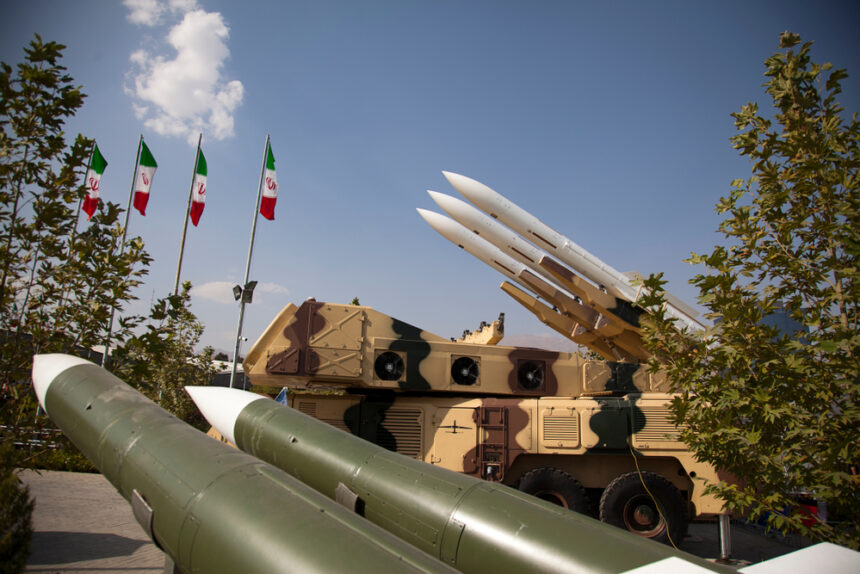
The United States sanctioned 13 individuals and entities on Tuesday over alleged support for Iran’s weapons procurement, with targets based in Russia, China, Hong Kong and Pakistan.
What was designated?
Both the Treasury and State departments acted. Treasury named a Beijing based representative of Iran’s defence ministry accused of coordinating procurement of finished weapons systems and dual use components in China, an Iran based electronics procurement group, a Hong Kong technology company with a China based representative, and the chairman of a Pakistan based group. State designated three companies under an executive order covering Iranian conventional arms activity, including a Russian aircraft manufacturer, a Russian shipping firm and an Iranian airline affiliated with the country’s air force.
What is the aircraft element?
The most concrete item. The Russian manufacturer produces the Yak-130, an advanced trainer aircraft. According to a State Department fact sheet, Russia first delivered several to Iran in late 2023 and shipped associated equipment in November and December 2025. Nearly all of a reported 24 aircraft contract has now been delivered. A trainer of this class also has light attack capability, which is why transfers of it attract attention beyond pilot training.
What do dual use components mean?
Items with civilian and military applications, such as electronics, connectors, bearings and machine tools. They are the hardest category to control, because the same part sold openly for commercial use can end up in a drone or a missile. Most procurement enforcement concerns these goods rather than finished weapons, which is why intermediary firms in third countries feature so heavily in Iran weapons sanctions.
What does a designation actually do?
Cuts access to the dollar. Designated parties have US assets blocked and Americans are barred from dealing with them, but the larger effect is on foreign banks, which risk losing access to the American financial system if they process transactions for a listed entity. That secondary exposure is what makes designations bite, and it is also why networks reconstitute under new corporate names.
Is it a finding of guilt?
No. Designation is an executive determination made by officials on an evidentiary standard well below a criminal conviction. Listed parties can seek delisting through an administrative process, and some succeed. Nobody named here has been tried, and readers should treat the allegations as the government’s position rather than as established fact.
How effective are measures like this?
Contested. Supporters argue each designation raises costs, disrupts established routes and forces networks to rebuild, which slows procurement even when it does not stop it. Critics note that Iran has operated under sanctions for decades and continues to acquire what it needs, and that suppliers in jurisdictions unwilling to enforce American measures face limited practical consequence. The Russian aircraft deliveries described here occurred despite extensive existing sanctions on both countries.
Why now?
Not stated. The action follows months of escalation involving Iran, including disruption to shipping through the Strait of Hormuz, and the timing sits alongside broader pressure on Tehran. Officials framed the aim as degrading the ability to reconstitute weapons programmes and raising costs for suppliers.