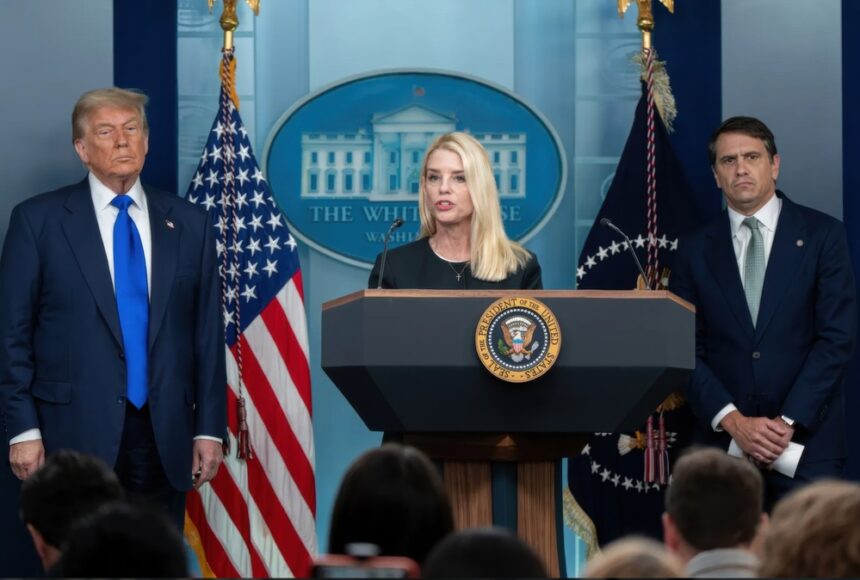
Todd Blanche, the acting attorney general awaiting a Senate confirmation vote, formally rescinded a $1.8 billion fund that had drawn opposition from Republican senators and prompted a court to declare the arrangement improper, the Justice Department announced on Aug. 2.
The order came days before a Senate Judiciary Committee meeting scheduled for Aug. 4 to consider Blanche’s nomination as attorney general. The committee had initially planned to vote on the nomination on July 29, but that vote was delayed after two Republican senators said they might withhold their support over concerns about the fund. With the arrangement rescinded, the path to confirmation appeared to clear.
Blanche said his team had met with committee members and senators over the preceding weeks to address concerns and outstanding questions, and that the rescission order was the result of those conversations proceeding in good faith.
What the fund was and why it drew objections
The arrangement at issue was created by the Justice Department as part of a settlement agreement in a lawsuit brought by Trump against the IRS over the leak of his tax returns. The settlement established compensation for individuals who claimed to have been targeted by what the department characterized as weaponization and lawfare under the previous administration.
Two Republican senators on the Judiciary Committee raised objections before the July 29 vote was scheduled, saying they had concerns significant enough that they might not vote to advance the nomination. Their resistance reflected discomfort with the legal structure and rationale of the settlement rather than opposition to Blanche personally, and it was enough to delay the confirmation process by several days.
A federal court had separately reviewed the fund and found the arrangement to be collusive and improper, a ruling that added judicial weight to the concerns being raised in Congress. That finding gave senators who were uncomfortable with the settlement a legal basis for their opposition beyond political disagreement.
The confirmation picture heading into August
Blanche had been serving in the acting role while awaiting Senate confirmation, a role that carries significant limitations compared to a confirmed cabinet officer. Senate Republicans have generally supported the Trump administration’s nominees, but the controversy illustrated how a specific policy decision tied to Blanche can complicate the confirmation process even when the nominee himself has broad support within the caucus.
With the fund rescinded and Blanche’s team having engaged directly with the objecting senators, the Aug. 4 meeting was expected to proceed on more favorable terms than what had been anticipated at the time the July vote was canceled. Whether the committee formally advances Blanche’s nomination on that date will determine how quickly the full Senate can vote.
The Justice Department is one of the most consequential executive branch agencies, and the position of attorney general carries responsibilities across federal law enforcement, civil rights enforcement, national security matters and the conduct of federal prosecutions. An acting holder like Blanche can perform the role’s day-to-day functions, but a confirmed attorney general has broader authority and a clearer mandate to set long-term department direction.
The IRS settlement and its broader context
The settlement at the root of this controversy involved Trump‘s lawsuit against the IRS related to the unauthorized disclosure of his personal tax returns. The lawsuit alleged that the leak constituted a violation of privacy protections covering taxpayer information and sought to hold the government responsible for the exposure.
The settlement created the fund to compensate individuals who claimed similar injuries, extending the scope of the agreement beyond the specific facts of Trump’s own situation. Critics of the arrangement, including the federal judge who reviewed it, argued that the settlement had been structured in ways that went beyond what legitimate litigation would produce, which is the basis for the court’s finding of collusion and impropriety.
Unwinding the arrangement does not eliminate the underlying legal questions about the IRS leak or about Trump’s individual claims in the original lawsuit. It removes one specific structure that drew judicial and congressional objection while leaving those deeper questions for future resolution.