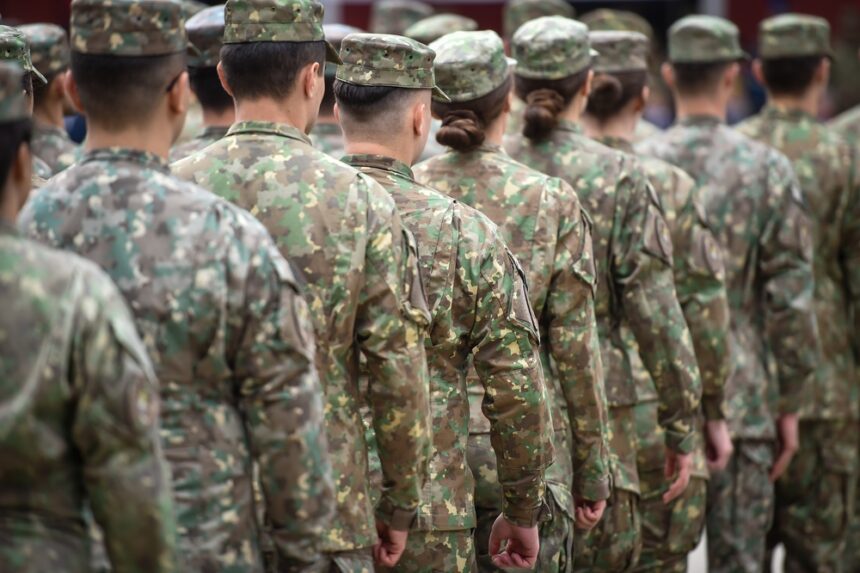
The nation’s top general said the U.S. armed forces have no plans to deploy troops to polling places during November’s midterms, responding to a Senate inquiry that had asked for explicit confirmation of that position.
Gen. Dan Caine, the military’s top officer and chairman of the Joint Chiefs of Staff, wrote in response to a letter from Sen. Elissa Slotkin, Democrat of Michigan, that state and local officials retain responsibility for overseeing election administration and security. He said the Joint Force has no plans to send federal personnel or federalized National Guard members to polling places during the 2026 elections. He also stated that the Joint Force has no plans to use such personnel to seize ballots, voting machines or other election-related material.
Caine added that he had not received any unlawful order concerning the military’s role in November and did not expect to receive one.
Slotkin’s Aug. 18 letter asked both Caine and Hegseth to confirm those positions in writing.
The context behind the inquiry
The question of troop involvement in polling has become a recurring concern among elected officials and civil society organizations in recent years, tied to broader debates about the appropriate use of federal and law enforcement power during electoral periods. Slotkin’s written inquiry and Caine’s written response create a formal documented record of the stated position.
The Joint Chiefs chair’s distinction between federal military forces and federalized National Guard members is legally significant. The National Guard can be federalized and placed under presidential command, or it can remain under state command, where it is subject to governors’ authority. Caine’s statement covers both categories, saying neither will be sent to polling places.
The statement that no unlawful order has been received or is expected represents Caine’s acknowledgment of the legal limits on federal troop involvement in domestic electoral processes. Federal law, including the Posse Comitatus Act, restricts the use of federal forces for domestic law enforcement purposes. Deployment of military federal troops to polling places without legal authorization would fall outside those limits.
What the letter establishes
Caine’s written response creates a contemporaneous record of the stated intentions prior to the election. That record could serve as a reference point if questions arise later about actual conduct during the midterms.
The 2026 midterms will determine the composition of the House, one-third of the Senate and numerous state offices. Security at the polls has been a contested issue in American politics since the 2020 presidential contest, and the involvement of federal personnel in polling place security has produced legislation and oversight efforts in recent years.
Caine’s response establishes the armed forces’ position independently of the civilian department leadership.