High cholesterol is one of the leading drivers of heart disease, heart attack and stroke in the United States. It is also, for the vast majority of people, completely invisible. No pain, no obvious symptoms and no reliable physical signal that anything is wrong. That invisibility is precisely what makes it so dangerous.
Understanding how cholesterol works and what to look for can make the difference between catching a problem early and discovering it only after a cardiovascular crisis.
What cholesterol actually does in the body
Cholesterol is a fatty substance that moves through the bloodstream and plays a necessary role in building healthy cells and producing hormones. The problem arises when levels get too high. There are two primary types to understand. Low-density lipoprotein, commonly referred to as LDL, is the form associated with harm. When LDL levels are elevated, cholesterol accumulates along the walls of arteries, forming plaque that narrows and hardens those vessels over time. High-density lipoprotein, or HDL, works in the opposite direction by helping the body clear excess cholesterol from the bloodstream. Low HDL levels reduce that clearing ability, compounding the risk posed by high LDL.
Both problems, separately or together, significantly raise the likelihood of cardiovascular disease.
Why high cholesterol is so hard to detect
For most people, high cholesterol produces no physical symptoms whatsoever. It develops silently over years, and the first indication that something has gone wrong is often a heart attack or stroke. That is not a rare outcome but rather the typical pattern for a condition that affects tens of millions of Americans who have no idea they are at risk.
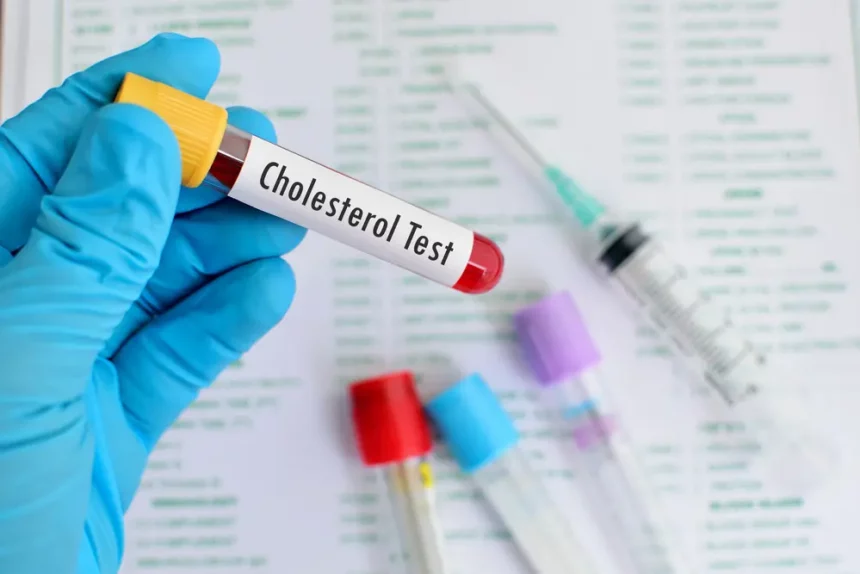
A blood test, specifically a lipid panel, is the only way to know for certain where cholesterol levels stand. Current guidance from major cardiology organizations recommends that children receive a lipid panel between the ages of 9 and 11, that adults begin screening at age 19 with testing every five years thereafter, and that all adults have their lipoprotein levels measured at least once. Elevated lipoprotein, a marker shaped largely by genetics rather than lifestyle, has been linked to a dramatically higher lifetime risk of heart attack or stroke.
When physical signs do appear
There is a narrow set of circumstances in which high cholesterol can produce visible or felt symptoms, but these situations generally indicate that the condition has progressed significantly or that an underlying genetic disorder is involved.
In cases of advanced cardiovascular disease, symptoms such as chest discomfort, shortness of breath or reduced tolerance for physical activity may emerge. These are not signs of high cholesterol in its early stages. They are signs that plaque buildup has already narrowed the arteries to a meaningful degree.
A separate category involves rare inherited conditions that cause cholesterol to reach extreme levels from birth. These disorders can produce distinctive physical markers including yellow fatty deposits on the skin or around the eyelids, a faint ring around the iris of the eye, chest pain, calf cramping during walking, slow-healing sores on the toes and sudden stroke-like episodes. Most people living with these conditions respond well to a combination of dietary changes, regular exercise and medication when identified early.
What to do if you are concerned
For anyone without an inherited disorder or advanced cardiovascular disease, there is no shortcut around blood testing. Physical observation simply cannot reveal what is happening inside the arteries. The only path to knowing is through routine screening, which is why guidelines increasingly emphasize testing even in people who feel perfectly healthy and have no obvious risk factors.
Beyond testing, the habits most associated with healthier cholesterol levels are also among the most well-established in medicine. A diet rich in whole foods and low in saturated fat, consistent physical activity and avoiding tobacco form the foundation of any cholesterol management strategy. These steps do not eliminate the need for monitoring but they meaningfully support it, reducing the likelihood that levels will reach a dangerous threshold before anyone has a chance to intervene.