
A small, fast boat moving through Caribbean waters turned out to be carrying a cargo worth millions of dollars. Its journey ended with a joint effort between the United States and a regional partner.
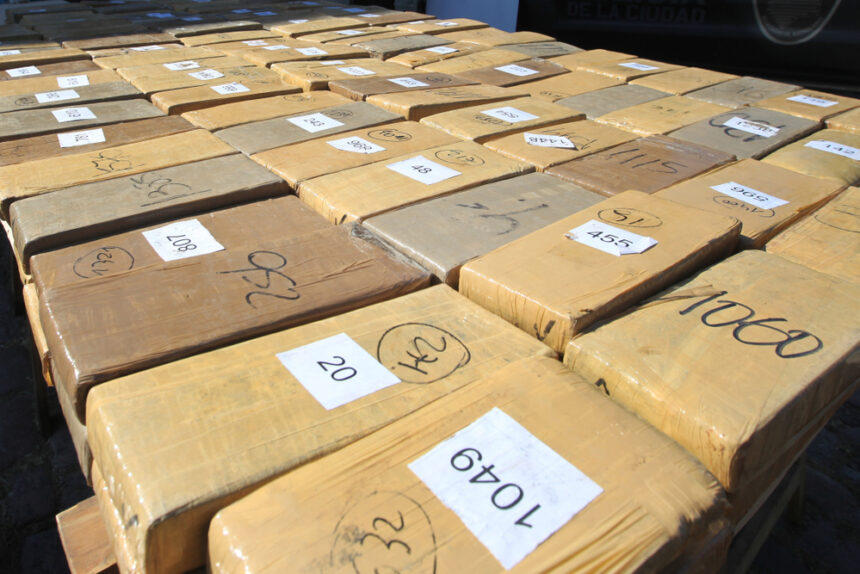
Forces from Trinidad and Tobago seized 411 packages of marijuana in a maritime operation backed by the United States, officials said. The marijuana bust carried an estimated street value of more than $3.7 million.
What happened in the marijuana bust?
The Trinidad and Tobago Defence Force detected and intercepted a speedboat carrying the packages, which held roughly 511 pounds of marijuana. Speedboats like this are small and powerful, built to outrun patrols and slip between islands.
Joint Interagency Task Force South, a U.S. organization that tracks drug shipments across the region, announced the seizure in a post on X on Oct. 8, 2026.
The task force said operations like this strengthen regional security and show what partners can accomplish when they work together against trafficking.
The post did not say whether anyone aboard was arrested. The post also offered no details about the crew, the size of the boat or the exact location of the stop.
What role does the U.S. task force play?
Based in Key West, Florida, the task force focuses on detecting and monitoring suspected drug shipments. Its work supports U.S. Southern Command, which oversees American military activity in Latin America and the Caribbean. Its area of focus stretches across millions of square miles of ocean, from the Caribbean to the eastern Pacific.
Those operations aim to disrupt and dismantle what officials describe as narcoterrorist networks in the Caribbean Sea and the Eastern Pacific Ocean.
Partner nations often carry out the stops themselves with support from American detection and monitoring. In this marijuana bust, Trinidad and Tobago forces both spotted and intercepted the boat.
Why is the Caribbean a trafficking hotspot?
Geography plays a major role. A May 4 report from the White House Office of National Drug Control Policy said the Caribbean’s complex geography gives transnational criminal organizations cover to hide their smuggling operations.
Thousands of islands, cays and stretches of open water create countless routes for small boats. These boats can move cargo quickly between islands or toward larger transit points, making them difficult to track.
Trinidad and Tobago sits just off the northeastern coast of Venezuela, placing it close to routes long used by traffickers moving drugs out of South America.
How big is this marijuana bust?
By weight, the haul is modest compared with some cocaine seizures in the region. By value, the marijuana bust still represents a significant loss for whoever was moving the shipment.
Based on the figures released, the packages averaged a little more than a pound each. The estimated street value works out to roughly $7,200 per pound, though such estimates can vary widely depending on the market.
The task force did not say where the boat was coming from or where the marijuana was headed.
What comes next after the marijuana bust?
Without details on arrests, it remains unclear whether anyone will face charges in connection with the shipment. Smuggling cases from maritime interdictions in the region are sometimes prosecuted in the United States, while others are handled by local authorities.
The task force has framed cooperation like this as a key tool against smuggling networks. Each marijuana bust adds to the pressure on groups that rely on the sea to move their product.
For now, the 411 packages are off the water. The larger challenge of policing a vast stretch of ocean remains, and the next marijuana bust may depend on the same kind of teamwork.