For decades the United States measured its strength at sea almost entirely by the size of its navy, while China quietly built one of the most dominant commercial maritime empires in modern history. That oversight is now being described by analysts and policymakers as a form of strategic blindness, one that Washington is only beginning to shake off.
The concept is straightforward but the consequences are vast. The United States equated sea power with warships while largely ignoring commercial shipping, port infrastructure, and container manufacturing. China pursued both simultaneously and now controls critical nodes across the entire global supply chain.
How China built its maritime empire
In 1989 China accounted for roughly 2 percent of global shipbuilding output. By the end of 2025 it had captured nearly 71 percent of new ship orders worldwide, up from 51 percent just three years earlier. That transformation accelerated under President Xi Jinping, driven by successive industrial policies including Made in China 2025, which targeted global dominance in strategic manufacturing sectors.
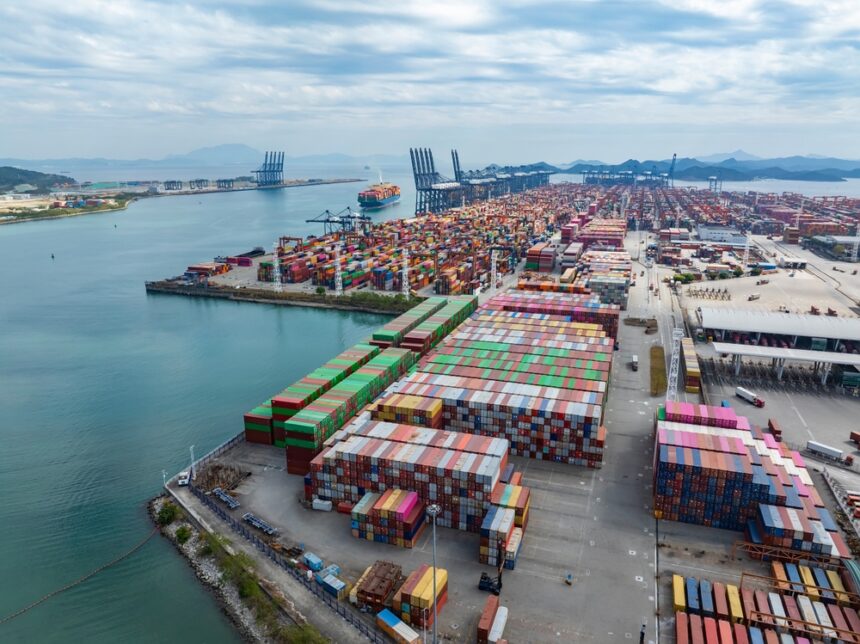
Chinese firms consolidated into state-backed conglomerates and steadily displaced Japanese and South Korean competitors who had previously led the industry. Today Chinese companies produce more than 95 percent of the world’s shipping containers, account for over 70 percent of global ship-to-shore crane production, and manufacture 86 percent of intermodal chassis. Chinese businesses also hold stakes, operating rights, or construction involvement in 110 ports across 67 countries, spanning every inhabited continent.
China has also used its influence at the International Maritime Organization, a United Nations agency, to push through regulations that favor its shipbuilders. New decarbonization standards would shorten the useful life of existing vessels, accelerating demand for new ships and further entrenching China’s advantage in low-emission shipbuilding.
The pandemic as a turning point
American policymakers largely assumed that open oceans and free trade would naturally deliver commerce to United States ports. The pandemic shattered that assumption. When shipping bottlenecks hit, carriers prioritized returning empty containers to Asia, where demand was higher, leaving American exporters short on capacity and absorbing dramatic increases in freight costs.
Congress responded with the Ocean Shipping Reform Act of 2022, the most sweeping overhaul of ocean shipping law in a generation. The legislation made it harder for carriers to reject American export cargo and gave the Federal Maritime Commission new authority to investigate industry practices. The commission has since hired additional legal and analytical staff and launched examinations of shipping conditions at seven major global chokepoints, from the Panama Canal to the Strait of Malacca.
Washington begins to push back
The most aggressive action came through a pair of investigations that ultimately produced a proposed fee of one million dollars per entry for Chinese-operated vessels at American ports. China’s lead trade negotiator made an unannounced trip to Washington to deliver a warning about global economic consequences if the fees were implemented. The measures were suspended as part of a one-year trade truce reached in November 2025, with renewal talks expected this fall. China, in turn, lifted export controls on rare-earth elements as part of the agreement.
The Justice Department has also entered the picture, indicting Chinese shipping container manufacturers for price-fixing during the pandemic. One of the indicted executives was arrested in Paris while boarding a flight to Hong Kong, and his extradition remains pending.
Analysts watching the situation note that the container indictment and the use of regulatory bodies to probe maritime markets represent a new phase of American engagement with the issue, one driven by urgency rather than long-term strategy. The concern now is whether that urgency holds, or whether the next crisis pulls Washington’s attention away before any lasting changes take root