U.S. authorities working alongside Costa Rican and Colombian partners seized more than 5,300 pounds of cocaine in a coordinated maritime interdiction in the Eastern Pacific, detaining three suspects in an operation that unfolded across multiple agencies and two countries.
The Joint Interagency Task Force South described the operation in an Aug. 6 statement, tracing the sequence from initial detection to final interdiction. The Colombian navy first identified the go-fast vessel as it departed Colombia and began heading toward Costa Rica along a route known to enforcement agencies as a trafficking corridor. Colombian authorities tracked the boat and shared that intelligence with their partners.
A maritime patrol aircraft from U.S. Southern Command then located the cocaine-laden vessel 179 nautical miles off the Panamanian coast and confirmed the presence of packages. The aircraft maintained surveillance while the Joint Interagency Task Force provided real-time intelligence to Costa Rican authorities.
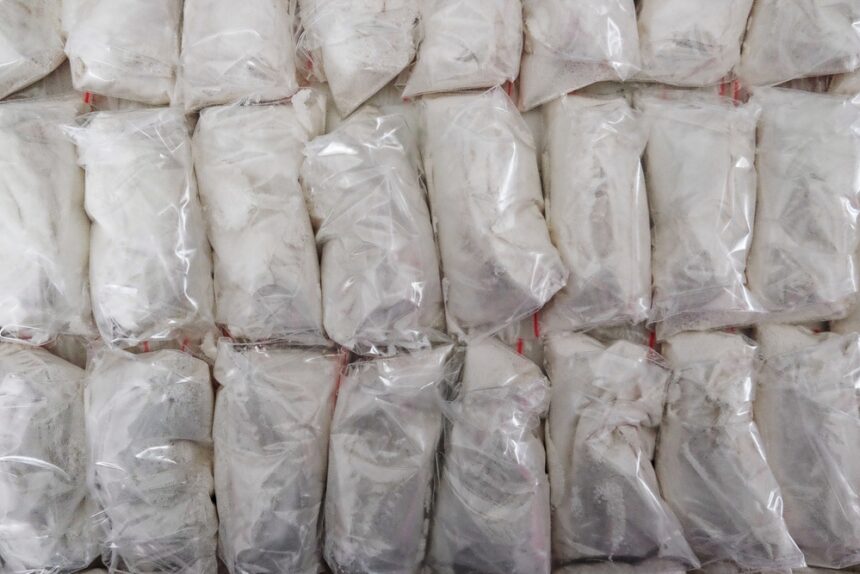
Costa Rican interceptor boats moved to close with the vessel and brought it to a stop. Agents seized 71 bales of cocaine, and three individuals were detained.
How the operation illustrates regional coordination
The interdiction reflected a multi-layered coordination structure that law enforcement agencies in this region have developed to address the volume of maritime drug trafficking through the Eastern Pacific. Colombian military tracking identified the vessel and its route, American surveillance aircraft provided airborne monitoring and positioning data, and Costa Rican vessels carried out the physical stop and seizure.
Joint Interagency Task Force South functions as the coordinating hub for this kind of operation, aggregating intelligence from multiple sources and passing it to the agency best positioned to act at each stage. The task force’s statement described the result as rapid-response coordination in action.
The Eastern Pacific as a drug trafficking route
The Eastern Pacific corridor off the coasts of Colombia, Panama and Costa Rica has been one of the more active maritime drug trafficking routes. Go-fast vessels, small and fast enough to evade radar and outrun slower patrol ships, are the primary mode for cocaine trafficking of this kind.
Counterdrug operations have seized substantial cocaine quantities over the years through aerial surveillance, maritime interception and ground-level intelligence sharing. The 71-bale, 5,300-pound cocaine seizure falls within the range of significant interdictions in this part of the Eastern Pacific, where cocaine trafficking volumes are substantial.
Three suspects were detained with the vessel. Their nationalities and the status of legal proceedings against them were not included in the task force’s Aug. 6 announcement.
The role of JIATFS and SOUTHCOM
Joint Interagency Task Force South, headquartered in Key West, Florida, oversees counterdrug operations across a vast maritime area covering the Caribbean, the Eastern Pacific and parts of Central and South America. U.S. Southern Command provides the broader operational framework within which JIATFS operates.
The task force’s statement noted that its cocaine detection and monitoring efforts directly support operations aimed at dismantling transnational criminal organizations and protecting American security interests.