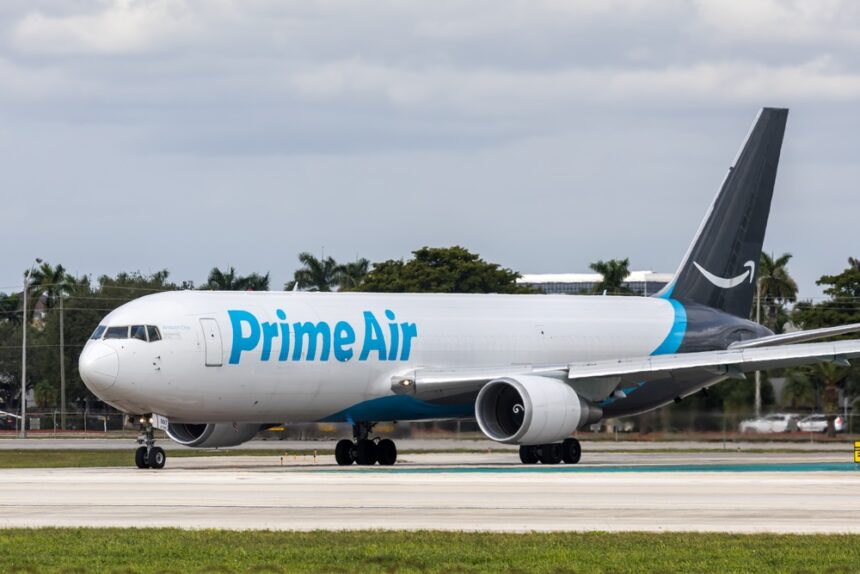
Flight data recorder evidence from an Amazon Prime Air cargo plane that went down on Sept. 6 at Miami International Airport suggests the pilot may have considered aborting the approach shortly after touching down, the National Transportation Safety Board said Tuesday.
NTSB investigator-in-charge Chihoon Shin said at a press conference that 30 seconds before the end of the flight data recording, the nose landing gear and right main landing gear touched down on the runway at 158 knots, or 181 miles per hour. Nineteen seconds before the end of the recording, the left main landing gear touched down at 134 knots.
A few seconds later, the brakes were released and the throttles were increased to values consistent with go-around thrust, which may indicate a late attempt to abort and return to the air. Eleven seconds before the end of the recording, the throttles were reduced to idle power and the brakes were reapplied. The final ground speed recorded was 65 knots.
The crash killed five people on the ground and injured five others. Both the pilot and co-pilot survived.
NTSB Chair Jennifer Homendy told reporters on Sept. 8 that investigators would interview both pilots on Wednesday before releasing details from the cockpit voice recorder. Investigators recovered both the flight data recorder and cockpit voice recorder, commonly called black boxes, on Monday.
What the data shows
The sequence captured in the data is notable for the asymmetry in the touchdown. The nose gear and right main gear touching first at 158 knots, followed by the left main gear at 134 knots more than 10 seconds later, is an unusual sequence. The substantial difference in speed between the two events suggests the plane was not in a standard configuration when it first made contact with the runway.
The brakes-released and throttle-increase event, consistent with go-around thrust, suggests someone in the cockpit initiated a procedure associated with aborting a landing. The timing, coming after the aircraft had already touched down with multiple gear points on the runway, represents a very late point to attempt a go-around.
The return to idle throttle and reapplication of brakes 11 seconds before the recording ended suggests the go-around attempt, if that is what it was, did not succeed and the crew reverted to stopping the aircraft.
What investigators are still gathering
The cockpit voice recorder contents have not yet been released. Homendy’s decision to interview the pilots before releasing the audio suggests the board wants firsthand testimony before the cockpit conversation becomes part of the public record.
No cause has been formally determined and the inquiry is in its early stages.