
Nearly six years after the cameras stopped rolling, a film about one of the darkest chapters of the pandemic is finally headed to theaters in China, and not everyone is pleased.
“Angels in White,” a movie honoring medical workers during the COVID lockdown in Wuhan, is set for release Nov. 6, 2026. The news has drawn sharp criticism on Chinese social media.
What is “Angels in White” about?
The film depicts the doctors, nurses, medical professors and other frontline workers who treated patients during the 76 days Wuhan was locked down in 2020. Wuhan was the city where the coronavirus outbreak was first identified. The city has a population of about 11 million.
“Angels in White” stars Hong Kong actor Andy Lau and Yang Zishan and was directed by Herman Yau. Lau is one of the biggest stars in Hong Kong cinema, known for films such as “Infernal Affairs.”
Why was the release of “Angels in White” delayed?
Filming of “Angels in White” wrapped in December 2020 after little more than a month of production. The project then ran into registration problems and was refiled under a new name in 2023.
It did not win approval for release until July 2025. It was briefly scheduled to open that August before being pulled from the calendar.
A movie blogger writing on a Chinese news portal called it the most awkward new film and suggested the delays reflected public weariness with the outbreak. China kept strict lockdowns in place through 2021 and 2022, when such a movie was unlikely to be well received.
Why are some viewers criticizing the film?
Critics say “Angels in White” celebrates the heroism of medical workers while glossing over the suffering caused by the government’s harsh lockdown policies.
A prominent political commentary account on X criticized the film for turning the lockdown of a city of millions into a heroic blockbuster while ignoring how authorities handled the early outbreak, including efforts to silence doctors who raised warnings.
A commentator on Chinese affairs based in the United States said Wuhan’s frontline medical workers deserve the greatest respect, but argued the film’s framing could erase public debate over officials’ concealment of information and the harm caused by extreme measures. He called the government’s portrayal of the pandemic as a victory deeply troubling.
What happened during the Wuhan lockdown?
Cases of an unexplained pneumonia were reported in Wuhan in late 2019. Li Wenliang, an eye doctor at Wuhan Central Hospital, warned fellow medical workers in a group chat about an outbreak resembling SARS. Police reprimanded him and other doctors who raised early alarms.
Li later died of COVID in February 2020, and his death sparked a wave of public grief and anger in China.
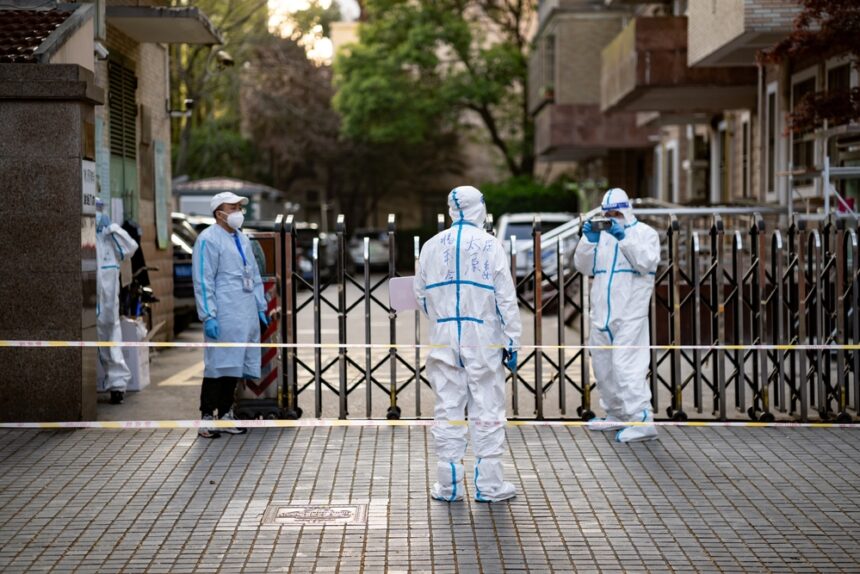
On Jan. 23, 2020, Wuhan imposed a sweeping lockdown that halted most travel in and out of the city. The restrictions lasted until April 8.
Residents faced strict limits on movement, and some struggled to get medicine or food while confined to their homes. Videos and accounts from residents during the lockdown spread widely online before many were censored.
How does China view its pandemic response?
Beijing has defended its handling of the outbreak and rejected accusations that it covered up early information. Officials have long portrayed the fight against the virus as a national success.
The debate over “Angels in White” reflects a broader disagreement about how the pandemic should be remembered, whether through the sacrifices of medical workers and residents or through the policies that shaped their suffering.
Whether audiences turn out for “Angels in White” when it opens Nov. 6 may offer a test of how Chinese viewers feel about revisiting those 76 days.