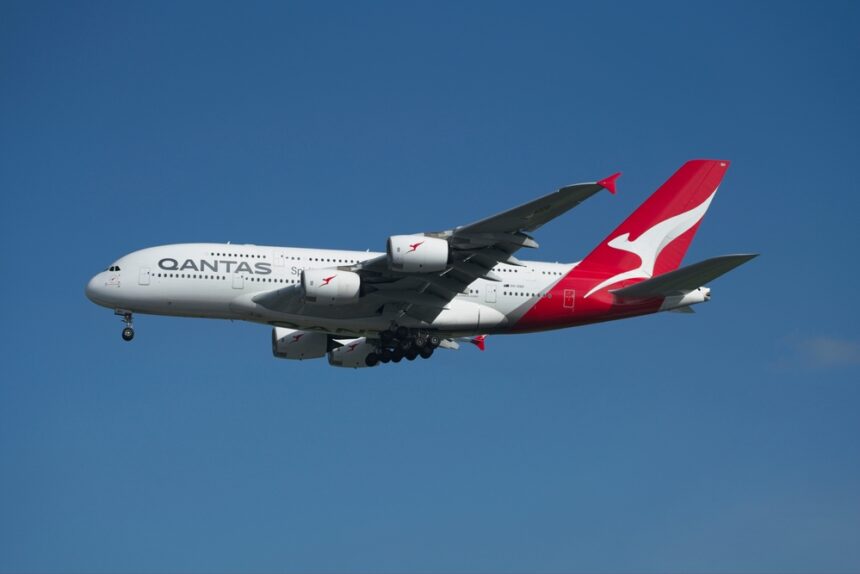
Qantas reported a 13.8 percent fall in underlying profit to $2.06 billion for the 2026 financial year, with Qantas absorbing approximately $420 million in earnings impact from the Middle East conflict and the resulting price surge it triggered.
Profit after tax fell 19.7 percent to $1.29 billion. The total increase in the airline’s fuel bill was $610 million, but Qantas said it moved quickly to adjust fares and capacity and redeployed aircraft to limit the net impact on earnings to $420 million. Chief executive Vanessa Hudson described the result as strong given those conditions.
Hudson said the final four months of the year saw business and consumer confidence fall as the conflict and related economic headwinds created uncertainty. Large corporate clients and government customers responded by managing costs more tightly and reducing their travel demand, she said, which created additional pressure on the airline’s revenue beyond what the fuel increase alone produced.
How Qantas responded
In response to the surge in jet prices, the airline moved quickly to adjust fares and capacity and redeployed aircraft to offer customers more routes to Europe. The strategy was designed to capture demand that shifted away from Middle Eastern routing options during the conflict and to offset some of the margin pressure from higher costs.
The $190 million gap between the total bill increase of $610 million and the $420 million net earnings impact reflects the combined effect of fare adjustments, the route redistribution and other mitigation measures the company implemented.
The conflict’s effect on aviation
The war in the Middle East has had layered effects on international aviation. Fuel prices connected to the conflict represent the most direct financial impact for carriers, but the disruption of airspace and routing options, reduced corporate travel demand from major clients navigating their own uncertainty, and shifts in passenger preferences across affected routes have all shaped how airlines have performed.
Qantas, as a long-haul international carrier with significant Asia-Pacific to Europe traffic, is particularly exposed to route disruptions and fuel cost spikes. Flights between Australia and Europe that would typically use Middle Eastern airspace or stopovers have faced operational complexity, adding to costs and operational demands.
The result in context
The underlying profit of $2.06 billion, though 13.8 percent lower than the prior year, reflects the underlying strength of Qantas’s business model during a period when several comparable carriers reported significantly larger earnings declines or operating losses.
The airline had rebuilt its financial position substantially in the years following the COVID-19 pandemic, which grounded much of its international operations for extended periods. That recovery created a buffer that allowed the company to absorb the 2026 fuel impact without returning to the kind of losses it reported in the pandemic years.
Hudson’s framing of the result as strong reflects that context. A $2.06 billion underlying Qantas profit at a time when global aviation was absorbing a $610 million fuel shock at a single carrier represents a resilient operational performance.