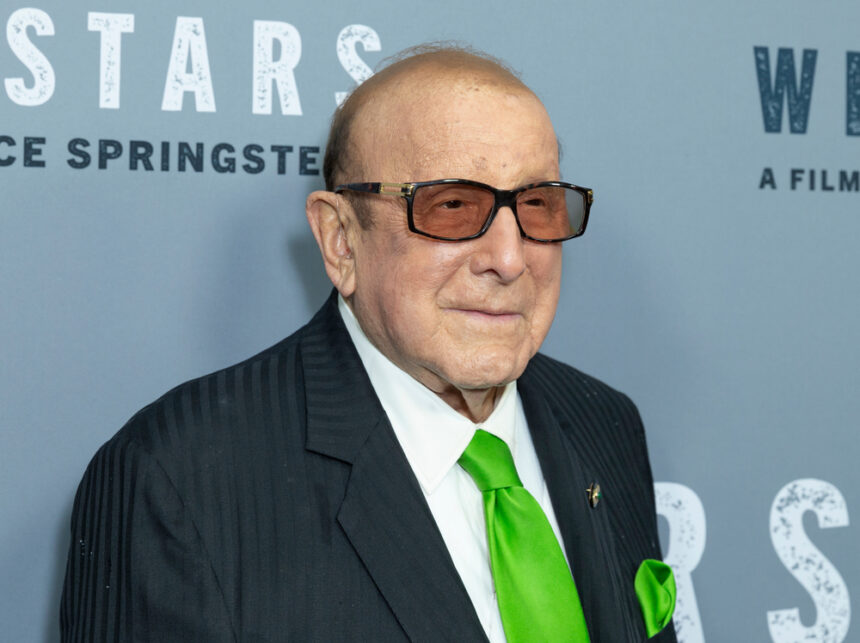
Clive Davis, the Grammy-winning producer and music executive whose instincts, ambition, and six decades of relentless work helped shape the careers of some of the most celebrated artists in modern history, has died at the age of 94. His family confirmed the news on Monday through a statement released on his official channels.
Davis had recently been hospitalized for an upper respiratory infection. No specific cause of death was disclosed. His family described a man whose influence on the music industry extended far beyond commerce, calling him someone who had mentored and championed the greatest artists in modern music history and left an indelible mark on culture that would endure for generations.
A career that defined what music executives could be
Davis did not simply sign artists and manage catalogs. He was a hands-on creative force whose ear for talent and belief in the power of the right song transformed careers that might otherwise have stalled or never fully launched. He had an unusual ability to identify potential in artists at moments when others were uncertain, and an equally unusual willingness to invest the kind of personal and institutional energy required to help that potential reach its fullest expression.
His career spanned the full arc of the modern music industry, from the era of vinyl and radio dominance through the fragmentation of the streaming age. He held senior positions at major record labels over more than six decades, shaping the sound of popular music across genres and generations. Where he invested his attention, the music industry tended to take notice.
The artists whose lives he shaped
Davis’s legacy is inseparable from the careers of the artists he championed. He is credited with discovering and developing performers whose names became synonymous with entire eras of popular culture, working across genres that ranged from pop and soul to rock and rhythm and blues. The breadth of his influence was not merely commercial, though the commercial results were extraordinary. His artists produced music that accompanied some of the most significant personal and cultural moments in the lives of millions of people over multiple generations.
He had a particular gift for understanding what a song needed to become something lasting, and for communicating that understanding to artists in ways that elevated rather than constrained their creativity. The relationships he built with his artists were often described as something closer to partnership than the purely transactional arrangements that characterize much of the industry.
A life marked by resilience
Davis was diagnosed with Bell’s palsy in 2021, a neurological condition that causes sudden weakness or temporary paralysis on one side of the face. The diagnosis did not slow his engagement with the industry or his public presence, and he continued to be a visible and active figure in music circles well into his nineties.
His career produced Grammy recognition that placed him among the most formally celebrated figures in the industry, a distinction that reflected not just longevity but the sustained quality of work that endures the test of time and critical reassessment.
The music industry produces no shortage of powerful executives, but few have combined the breadth of commercial achievement, the depth of artistic relationship, and the duration of sustained influence that Davis brought to his six-decade career. His family’s description of him as a legend is not hyperbole but an accurate accounting of what he left behind.
The soundtrack of modern popular music is, in significant part, a product of the choices he made across a lifetime of listening carefully and believing in what he heard.