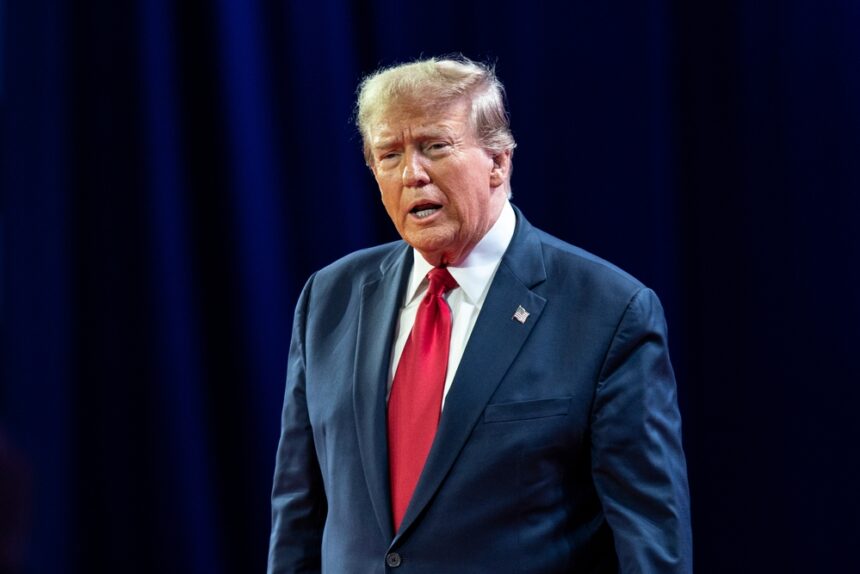
Trump added his voice to a growing conversation on Sunday, April 26, when he publicly backed a proposal to rename Immigration and Customs Enforcement to National Immigration and Customs Enforcement. The shift would transform one of the most politically charged acronyms in Washington from ICE to NICE, and the president made clear he was fully on board.
The idea did not originate in the White House. It began in March when a conservative social media influencer named Alyssa Marie floated the concept online, framing the rename as a way to force media outlets and critics to use softer language when referring to federal agents carrying out immigration enforcement. The post gained traction, and more than a month later Trump endorsed it on Truth Social, calling it a great idea and urging it to move forward.
Trump and the art of the rename
Whether or not the name change ever becomes official is a separate matter entirely. Renaming a federal agency typically requires an act of Congress, a detail that has not slowed the current administration’s appetite for rebranding. In September 2025, Trump signed an executive order seeking to rename the U.S. Department of Defense to the Department of War, a move that drew its own wave of debate about the legal limits of executive authority over agency names.
The NICE proposal arrives at a particularly fraught moment for the agency. ICE has faced intense scrutiny and widespread criticism following a series of events that put federal immigration enforcement under a harsh national spotlight.
ICE under fire
Operation Metro Surge, a large-scale enforcement action carried out in Minneapolis earlier this year, ended in tragedy when federal agents fatally shot two U.S. citizens, Renee Good and Alex Pretti. The deaths sparked fierce backlash and reignited a broader debate about the scope and conduct of immigration enforcement operations across the country.
That criticism has spilled into Washington’s budget battles. Funding for the Department of Homeland Security, the parent agency of ICE, has been stuck in a prolonged standoff. Democrats have pushed for accountability and reform measures tied to the deaths before agreeing to any new funding. Earlier this month the Senate approved a bill to fund the entirety of DHS with the exception of ICE and Border Patrol, a measure that was swiftly rejected by House Republicans who insisted on full agency funding.
On Thursday, April 23, the Senate moved again, this time approving a $70 billion package that would fund ICE and Border Patrol for more than three years. The measure now heads to the House for a vote.
Agency operations continue
Despite the funding uncertainty, ICE has not faced a severe disruption to its operations. The agency had already secured billions of dollars through legislation passed by Congress in 2025, providing a financial cushion that has kept day-to-day enforcement largely intact while the broader budget debate continues.
The name change proposal, meanwhile, remains exactly that. No formal legislation has been introduced, and the White House has not outlined any specific steps toward making it official. Still, Trump’s endorsement ensures the idea will not fade quietly, and in an administration that has shown a consistent interest in reshaping how government institutions are named and perceived, NICE may not be as far-fetched as it sounds.
Whether the acronym ever lands on the doors of federal field offices remains to be seen. For now, it lives where it started, on social media, where the gap between a viral post and a presidential thumbs-up turned out to be surprisingly small.