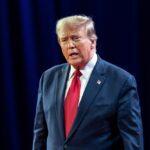
President Donald Trump’s Religious Liberty Commission held what it described as its final public hearing in Washington on April 13, and the session quickly became one of the more charged gatherings in the panel’s brief history. The commission’s chairman, Texas Lt. Gov. Dan Patrick, opened with a sweeping denunciation of the idea that church and state must remain separate, calling it the greatest lie told in America since the nation’s founding.
The remarks set the tone for a hearing that drew witnesses from across the religious spectrum, touched on topics ranging from school curricula to Hindu temple security, and drew sharp condemnation from civil liberties organizations monitoring the commission’s work.
What the commission is and why it matters
Trump established the commission through an executive order in May, charging it with producing a comprehensive report on the foundations and current state of religious liberty in the United States. The panel is set to deliver that report by July 4, 2026, the 250th anniversary of American independence, though commissioners suggested during the hearing that an extension was possible given the scope of the work remaining.
The commission has no formal legislative power but carries significant symbolic weight as a White House-backed body. Critics, including a multifaith coalition of advocacy organizations, have filed suit against the administration alleging that the commission lacks adequate religious and ideological diversity and amounts to a vehicle for promoting Christian nationalism rather than broad religious freedom.
The church-state debate at the center of the hearing
The First Amendment prohibits Congress from making any law establishing a religion, but the phrase separation of church and state does not appear anywhere in the Constitution. The concept was articulated by President Thomas Jefferson in the early nineteenth century and has since become a foundational principle in American legal and civic life.
Patrick’s dismissal of that principle drew an immediate response from Americans United for the Separation of Church and State, which called his remarks an attack on democracy and described the separation of church and state as something the country should be proud of and actively defend.
The first witness of the day, a law professor specializing in religion at a Virginia law school, framed religious liberty as an objective good for the nation. She argued that government overreach into Americans’ religious practices has historically been a greater threat than conflict between faith communities, and she praised the Supreme Court’s recent expansion of First Amendment free exercise protections. A 2025 ruling in which the court sided with Maryland parents seeking to exempt their children from public school curriculum involving LGBTQ themes was cited as a positive development.
Other voices at the hearing
A civil rights figure who participated in the Greensboro sit-ins of the 1960s addressed the commission, describing religious liberty as essential to that movement. Faith communities provided the meeting places, the language and the moral foundation for the struggle, he said.
Several commissioners raised concerns about broader trends they saw as threatening to religion in public life. One noted the growing number of Americans who identify with no religious tradition, warning that a society less rooted in shared moral narratives posed risks to democratic culture. A representative of a Hindu organization expressed alarm about attacks on temples across the country and described a climate of fear and uncertainty within his community.
The television personality known as Dr. Phil, serving as a commissioner, raised the case of a group of New York nuns who filed a First Amendment lawsuit in early April challenging a state law they say conflicts with their Catholic beliefs around care for transgender patients.
Patrick also highlighted Texas initiatives including a school voucher program that has directed taxpayer funds to private religious schools and a requirement that public schools display the Ten Commandments in classrooms. Both measures have faced legal challenges.
A commission under scrutiny
One former commissioner alleged after her removal earlier this year that she was pushed out in retaliation for making public statements about Israel that conflicted with the administration’s positions. The commission has not addressed those claims directly.
Patrick said the panel still had considerable work ahead before presenting its report to Trump, and commissioners expressed confidence that the effort would prove to be a lasting part of the administration’s legacy on religious freedom.