
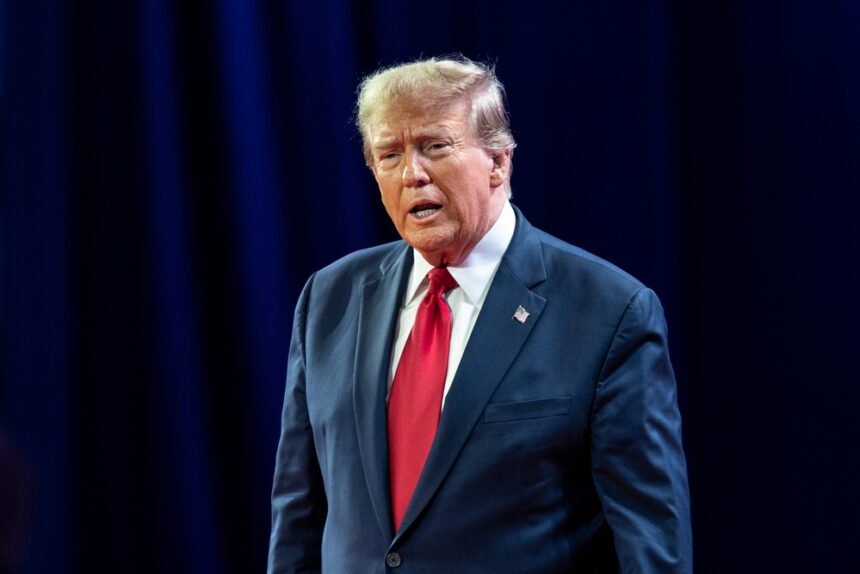
President Donald Trump said Republicans lost the midterms because he was not on the ballot. In a Truth Social post late Tuesday, Nov. 3, he wrote that Republicans would have won in a landslide if his name had appeared. That same night, he told The New York Times he would accept the results and work with Democrats. He acknowledged voters were unhappy about oil prices but said he does not regret the war with Iran.
That message reversed his campaign pitch. A Washington Post analysis found that Trump declared himself on the ballot, or urged supporters to pretend he was, 63 times before Election Day.
How many times did Trump say he was on the ballot?
The Post counted 63 times, including more than 50 in October and early November alone. As recently as Monday, he told South Carolina voters on a tele-rally to pretend he was on the ballot and insisted that, in a real sense, he was.
There is another side to the count. Between August 2025 and November 2026, the Post found, Trump also argued 61 times that Republicans struggle to turn out his voters when his name is missing. In other words, his election night explanation had been part of his message all along, running alongside his request that supporters treat the midterms as a vote on him. The Post used an AI model to sort his statements and checked its results against a test set labeled by humans.
How is the White House explaining the losses?
A White House official told Newsweek the mood inside the administration was defiant. The official argued that Trump voters turn out when he is on the ballot, that candidate quality mattered and that Trump promoted many Republicans better than they promoted themselves. The official also predicted that Democratic voters would regret their choice once gas prices fall after the Iran conflict ends.
Vice President JD Vance took a different view. He blamed the losses on voter frustration over the Iran war, which has pushed up oil prices while costs were already high. Trump later told reporters that Vance’s take was largely true, though he said he would make the same decision on Iran again. NBC News exit polling showed deep dissatisfaction with Trump’s policies among voters.
What are Trump’s critics saying?
Republican critics of the president took a victory lap. Former Rep. Adam Kinzinger wrote that voters rejected cruelty, corruption and authoritarianism, not just Trump himself. Former Sen. Mitt Romney said on X that bad policy and bad character make for bad politics, and he called for a course correction.
The media hit back too. Time magazine’s Nov. 23 cover shows Trump with an “I Voted” sticker over his mouth. Its cover story lays out Democrats’ plans to roll back tariffs, restore Affordable Care Act subsidies, reverse $1 trillion in Medicaid cuts and investigate the administration. The New York Post ran a front page calling the results a blue tsunami.
What happens next between Trump and Democrats?
Trump told the Times that Democrats had already reached out, though he would not say who. He named the debt ceiling as a possible area of agreement and reminded them that he holds veto power, so they would have to come to him.
Inside the White House, the mood on election night was tense. Some attendees at the East Room watch party described the atmosphere as grim, and people familiar with the evening said Trump vented at aides over polling. A White House official disputed that he was frustrated with his advisers.
Black voters, who backed House Democrats by roughly 80 points according to Times Voter Trends, helped deliver the new majorities. The next two years will show whether a president who says he wasn’t on the ballot and a Congress elected partly against him can find common ground.