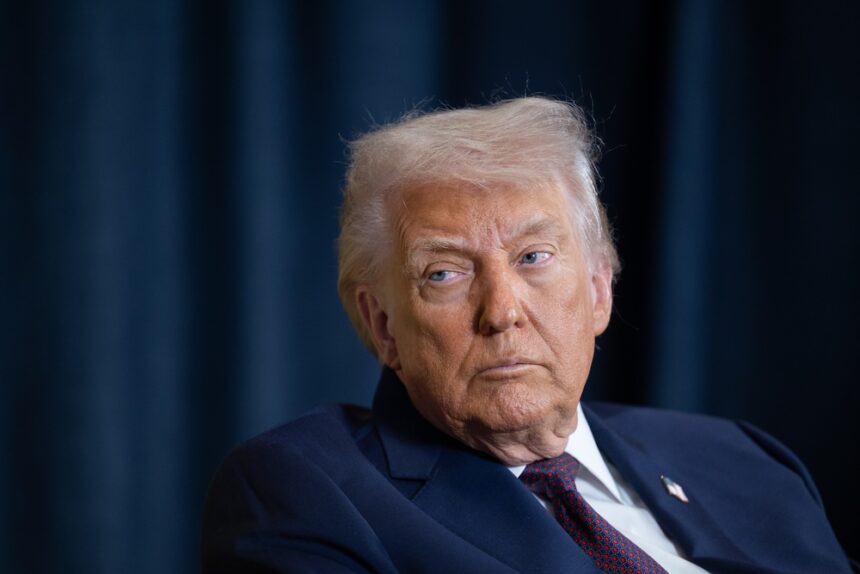
President Donald Trump issued a direct threat to Iran on Wednesday, warning that the United States will strike infrastructure targets inside the country, potentially including sites near Tehran, each time Iranian attacks on shipping in the Strait of Hormuz occur. The warning came as the military confrontation between the two countries entered its 11th consecutive day.
Trump posted the threat on Truth Social on July 22, naming bridges and power plants as possible targets and making explicit that some of those structures could be located in or adjacent to the capital. He framed the policy as an automatic consequence, stating that any attack on a ship in the strait, by any means, would trigger the destruction of one such target by U.S. forces.
Trump’s message was directed at the government of the Islamic Republic and represented one of the most specific public threats the administration has made regarding the targeting of civilian infrastructure in the country since the conflict began.
Eleven nights of strikes
U.S. Central Command confirmed on Tuesday evening that it had conducted an 11th night of strikes against targets inside Iran. CENTCOM described the operations as intended to further degrade Iran’s ability to threaten commercial shipping in the strait, the narrow waterway through which a significant portion of the world’s oil supply moves daily.
Targets struck across the 11-night campaign include military operations centers, maritime warfare capabilities, aircraft hangars, drone storage facilities and military logistics infrastructure. The strike program has been methodical in its focus, targeting the assets that allow the country to project force against vessels in the Gulf region.
The conflict escalated following a series of attacks on multiple commercial ships in the Strait of Hormuz earlier this month. Those attacks triggered the U.S. military response that has now stretched through nearly two weeks of consecutive overnight operations.
Iran’s response beyond the strait
Tehran has not limited its response to the strait. The country’s military has launched attacks against nations in the Middle East that host U.S. military assets and bases, widening the geographic scope of the conflict beyond the waterway where the initial confrontations occurred.
The pattern reflects a strategy of simultaneous pressure on multiple fronts, targeting the broader American military network in the region rather than engaging solely where U.S. forces have struck. The effect has been to draw several regional partners of the United States into the orbit of a conflict that began as a maritime dispute.
What the Trump warning signals
Trump’s warning about infrastructure targeting represents a significant escalation in the rhetorical dimension of the confrontation. Earlier U.S. statements about the strikes focused on military targets. The explicit inclusion of bridges and power plants, and the specific mention of targets near or in the capital, extends the stated scope of potential U.S. action into categories that would affect civilian populations.
Trump’s stated policy ties future targeting decisions directly to the behavior of the Islamic Republic at sea, creating a declared tripwire. Whether the administration would follow through on the threat in the specific terms described, and what international legal and diplomatic implications such targeting would carry, are questions Trump’s statement does not answer.
The conflict has driven oil prices sharply higher and raised alarm among shipping companies, insurers and governments that depend on uninterrupted flow through the Strait of Hormuz. Trump has not announced any ceasefire discussions, and both U.S. and Iranian military forces appear to be maintaining active operational postures heading into what would be a 12th night of potential exchanges.