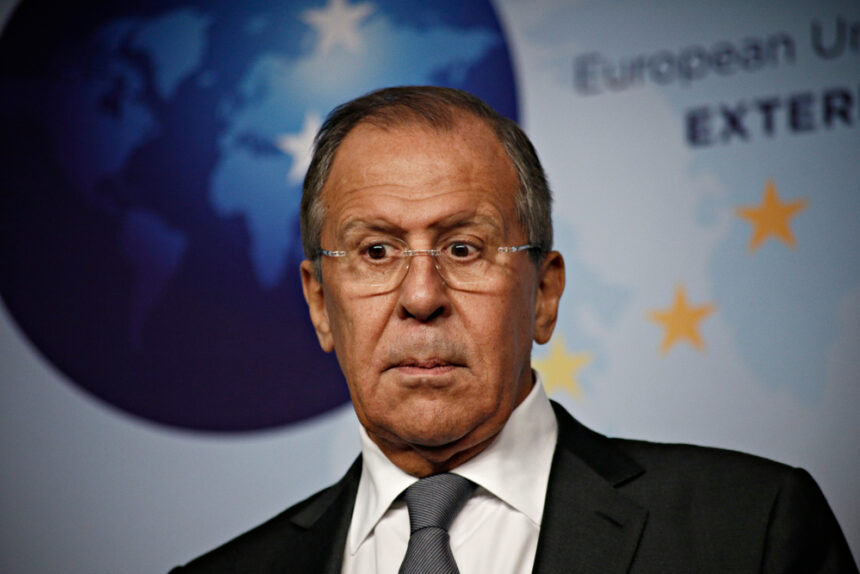
Russian Foreign Minister Sergei Lavrov said Monday that NATO military activity in the Arctic poses a direct threat to Russian security and risks triggering armed confrontation with potentially disastrous consequences, in an article published by the Russian Foreign Ministry.
Lavrov wrote that intensive military preparations are underway close to Russia’s northern borders, and that NATO is conducting large-scale exercises that involve countries from outside the region while introducing new elements of its command-and-control system. He said that level of activity increases the risk of incidents that could escalate beyond control.
Lavrov also said the West is attempting to undermine Russia’s international cooperation in the region with countries from what he called the Global Majority, a term the Kremlin uses to describe African and Asian nations.
NATO’s Arctic posture
NATO conducted Arctic Sentry in February, a large-scale military exercise in the High North. Secretary-General Mark Rutte said at the time that it was a direct response to increased Russian military activity and growing Chinese interest in the region. Lavrov’s article directly challenges that framing.
Russia has maintained a naval presence in the region since the Soviet era, including nuclear-armed submarines. The country has long treated it as a strategic sphere of influence and has expanded its military infrastructure there in recent years as the region’s economic and strategic significance has grown. Melting ice has opened new shipping routes through Russian waters, increasing the commercial and military value of that access to all major powers with interests in the region.
The gap between how Russia and NATO frame their Arctic activities is total. NATO describes its exercises as defensive responses to Russian and Chinese activity. Russia describes the same exercises as threats to its security. Each characterization is a function of which party is doing the characterizing, and neither agrees with the other’s framing.
The Arctic strategic context
The region has become one of several theaters where the Russia-NATO relationship has deteriorated since 2022. Finland and Sweden’s accession to NATO extended the alliance’s presence and gave it a direct border with Russia that it did not previously have through that geography.
Norway and Denmark, including through Greenland, are NATO members with territory there and have been central to exercises like Arctic Sentry. The United States has Arctic coast through Alaska. Canada completes the alliance’s border presence in the region.
Russia’s fleet is based at Severomorsk on the Kola Peninsula, which also hosts a concentration of nuclear-armed submarines that make it one of the most strategically sensitive military installations in the world. American and NATO naval activity in the Barents Sea has been a source of ongoing tension.
Lavrov’s framing
Lavrov’s article represents Russia’s continued effort to characterize NATO expansion and activity as the aggressor in the current deterioration of European security, rather than as a response to Russian actions in Ukraine and elsewhere. The framing has been consistent throughout his tenure as foreign minister and reflects the Kremlin’s public positioning. Lavrov has made similar arguments in op-eds and public statements throughout the Ukraine conflict.
NATO’s position is the inverse. Its activities are reactive, and Russia’s invasion of Ukraine and its broader military posture explain the alliance’s defensive responses.