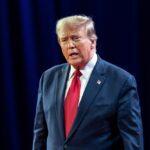
President Trump pushed back firmly against reports that the United States had agreed to invest money in Iran’s reconstruction as part of the recently announced peace framework, calling the claim ridiculous while addressing reporters at the G7 summit in France on June 16.
The denial came as conflicting accounts of the deal’s terms continued to circulate, with no official version of the memorandum of understanding published by either the United States or Iran. Trump had also addressed the money question in a post the previous day, rejecting reports that Washington had agreed to transfer a substantial sum to Tehran as part of the peace arrangement. His position was that no funds were being directed to Iran and that any suggestion otherwise was misinformation.
A deal whose text remains unpublished
The framework announced on June 14 ended the US naval blockade of Iranian ports and committed both sides to the full reopening of the Strait of Hormuz. The conflict itself began in late February when American and Israeli forces launched strikes against Iran, which the Trump administration said were intended to prevent Tehran from acquiring nuclear weapons. The agreement that followed represents a ceasefire and a diplomatic framework, with a formal signing ceremony held in Switzerland on June 19.
Despite the significance of the agreement, neither the White House nor Iranian authorities have released an official copy of the memorandum. That gap has allowed multiple unofficial versions to fill the information vacuum, each generating its own round of responses and denials. When a major American news network published what it described as a leaked copy of the deal, the White House communications director quickly dismissed it as not reflecting the actual language of the signed document. Iran’s semiofficial news agencies added their own complications, suggesting that other reported versions contained missing portions.
Vance drew similar lines before the deal was signed
The administration’s messaging on the financial question was consistent across multiple officials and preceded the formal announcement. Before the agreement was reached, Vice President Vance addressed what he described as misinformation spreading about the deal’s structure, stating clearly that Iran was not receiving any cash payment and that no funds would be released simply for signing an agreement or attending a meeting.
Vance framed the deal as one in which economic benefits for Iran would be conditional rather than immediate, tied to Tehran’s fulfillment of its obligations under the framework rather than provided upfront. That structure, in his telling, was designed to ensure that American and allied priorities were protected throughout the implementation process.
He also directed pointed criticism at people he described as changing their position based on unverified reports, arguing that critics who had praised the administration’s military pressure against Iran were now attacking a deal on the basis of anonymously sourced claims whose accuracy had not been established.
The challenge of an agreement nobody can read
The practical problem created by the absence of an official published text is that it leaves the field open for competing interpretations, selective leaks, and organized disinformation from parties with an interest in undermining the agreement. Both sides have incentives to present the deal favorably to their domestic audiences, which means unofficial versions circulating in media on either side are likely shaped by those incentives.
Trump’s statement that the United States retains the right to take future action against Iran if circumstances require it was a notable addition to his public remarks on the deal, suggesting the administration views the current arrangement as a framework that preserves American freedom of action rather than a permanent constraint on its options.