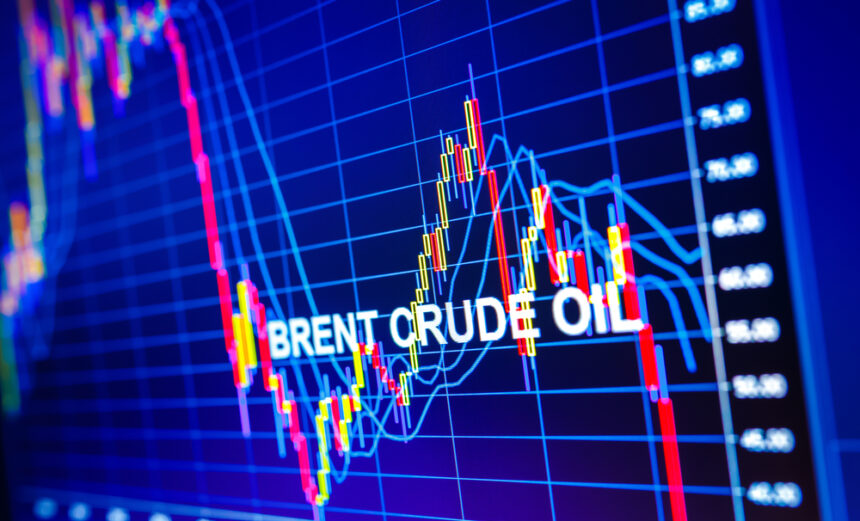
Brent crude oil surged above $91 per barrel on Aug. 31 after the United States struck Iranian military positions on Larak Island in the Strait of Hormuz, sending prices up more than 2 percent in early trading as markets reacted to the first known U.S. strikes on Iranian soil in roughly a month.
The benchmark price hit a high of $91.40 per barrel at 6.15 a.m. Eastern time on Aug. 31.
U.S. Central Command said its forces struck two rocket launchers loaded with sea mines on the small island after observing Islamic Revolutionary Guard Corps fighters preparing to launch the mines into the strait. CENTCOM spokesman Navy Captain Tim Hawkins said in an emailed statement that U.S. forces are monitoring the area closely and remain prepared to protect the free flow of commerce through what he described as an essential waterway.
The IRGC said several of its fighters were killed and injured in the attack. Through its in-house outlet Sepah News, the IRGC characterized the strike as an aggressive act based on desperation.
Why the Hormuz situation moves oil prices
The Strait of Hormuz is the single most significant oil shipping chokepoint in the world. Approximately 20 percent of global crude oil and petroleum product exports pass through the narrow waterway between Iran and Oman, including almost all the oil that leaves the Persian Gulf from Saudi Arabia, Kuwait, Iraq, the United Arab Emirates and Qatar. A disruption to transit through the strait affects global supply in ways that few other geographic events can.
The United States has maintained a naval blockade of Iran since February, and the conflict over who controls shipping access through the strait has been an ongoing source of price volatility. Markets have been pricing in a Hormuz risk premium throughout the conflict, but the Aug. 31 strike represented an active military exchange that briefly demonstrated how quickly that premium can move.
Sea mine deployment in the Hormuz approaches would not simply slow shipping. It would effectively shut down the most heavily trafficked oil lane in the world until those mines were located and cleared, a process that can take weeks and cannot begin under active military threat.
The context of the strike
The attack on Larak Island follows a pattern of U.S. preemptive strikes on IRGC preparations to disrupt shipping through the strait. CENTCOM’s statement described observing the rocket launcher deployment and striking before the mines could be launched, a posture consistent with the stated U.S. goal of keeping the waterway open.
Iran has repeatedly threatened to close or mine the Strait of Hormuz as a response to the American naval blockade and the Operation Economic Outcast sanctions campaign announced by the Treasury on Aug. 24. The Larak Island strike suggests the United States is responding to those preparations before they become operational rather than after.
The price context
Brent crude oil was trading in the low $90s per barrel before the Aug. 31 spike, already elevated above the $88 range of earlier in the summer due to the broader conflict. The 2 percent single-session move on Aug. 31 brought it to the highest level since the conflict intensified following the expiration of the U.S.-Iran memorandum of understanding in August.
Oil market analysts have been watching the Hormuz situation as the variable most capable of producing a supply shock rather than a demand-side price movement, with the distinction being that a Hormuz supply shock would be both faster and harder to reverse than the price increases the conflict has already produced.