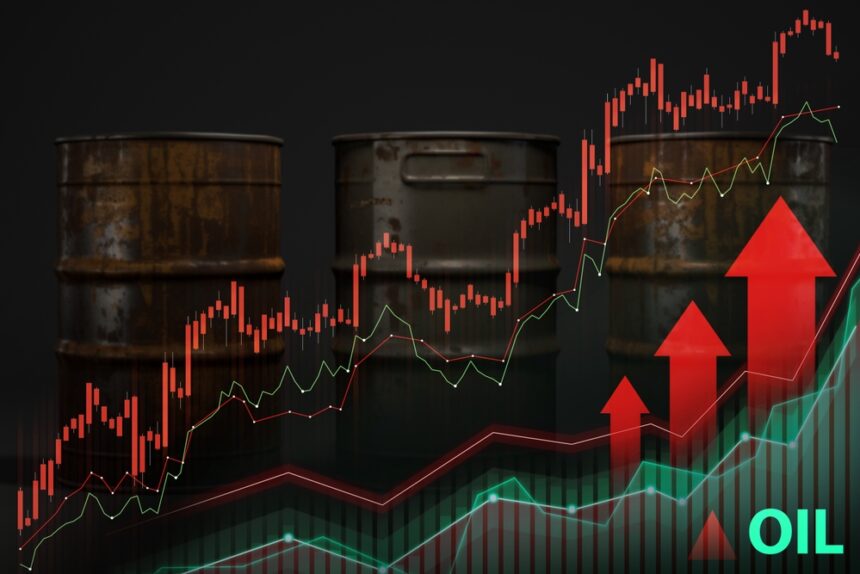
Oil prices rose on Aug. 20 as investors weighed the risk that stalled negotiations to end the U.S. and Israeli military campaign against Iran could continue disrupting energy supplies from the Middle East, with both major benchmarks hitting their highest levels since late July.
Brent crude futures for October delivery gained $1.20, or 1.3 percent, to $92.82 a barrel by early morning in U.S. trading. U.S. West Texas Intermediate crude futures for September added 92 cents to $86.75 a barrel. The more actively traded October WTI contract rose $1.13, or 1.3 percent, to $85.52. Both benchmarks were on a fifth consecutive day of gains after settling Wednesday at their highest levels since July 24. The September WTI contract was set to expire Thursday.
The Hormuz factor
Market attention has remained focused on the Strait of Hormuz, one of the world’s most critical oil shipping lanes. Before the conflict began on Feb. 28, oil shipments through the strait accounted for approximately one-fifth of global oil consumption. The naval blockade enforced by U.S. forces and the resulting disruptions to commercial traffic have kept that volume well below its prewar baseline.
Ship movements through the region’s two main energy chokepoints remained subdued, according to tracking company Kpler. Nine commodity vessels passed through Hormuz on Aug. 19, unchanged from a day earlier. Traffic through the Bab el-Mandeb Strait, which connects the Red Sea with the Gulf of Aden, fell to 27 commodity vessels from 32 the previous day.
The low vessel counts reflect the compounding effect of two simultaneous disruptions. The Hormuz blockade limits what enters and exits the Persian Gulf. The Houthi campaign in the Red Sea, ongoing since late 2023, continues to threaten vessels transiting toward and away from the Bab el-Mandeb. Both chokepoints have to function for oil and gas to move efficiently from the Gulf to global markets.
Why prices are moving now
The Aug. 18 expiration of the 60-day memorandum of understanding between the United States and Iran, without a final peace agreement and without an agreed extension, reset the market’s assessment of how long the disruption might last. President Trump said publicly that no talks are currently scheduled and that the blockade remains in full effect. The absence of a near-term diplomatic path keeps the risk premium in crude prices elevated.
Prices rising for a fifth consecutive session after that window closed reflects the market updating its probability estimates. Oil markets had been pricing in the conflict throughout its duration, but the failure to reach a deal within the negotiating window represents a specific data point that reinforces the most pessimistic scenarios about timeline.
The broader supply picture
The Hormuz partial restoration through the shuttle system managed by Abu Dhabi and Kuwait, which involves ship-to-ship transfers in the Gulf of Oman rather than direct tanker transits, has allowed some oil to reach the market. But the volume is a fraction of what moved through the strait under normal conditions.
For as long as the Hormuz blockade continues and diplomatic resolution remains unclear, the structural pressure on oil prices from supply constraint is likely to persist. The $92 Brent level reflects a market that has already absorbed significant disruption and continues to add risk premium as the conflict extends beyond its initial framing as a short-term event.