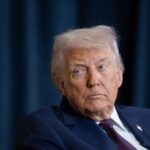
President Trump said on Aug. 18 that the United States is not engaged in negotiations with Iran and has no talks scheduled, while confirming that the naval blockade of Iran remains in full effect and that the Strait of Hormuz continues to operate normally.
He posted on Truth Social that all water mines in the strait have been removed or detonated, offering a status update on the military situation as the diplomatic window he had established with Iran expired without a final deal.
The statement came after the 60-day negotiating period established by a memorandum of understanding signed by the United States and Iran on June 17 closed without an agreement. The memorandum had provided for a potential extension if both countries mutually agreed, but Trump said Monday he was not seeking an extension.
What Trump said about the negotiations
The day before the post, he told reporters that Iran wants to make a deal but is not willing to make the kind of deal he considers necessary. He said the United States took military action against Iran with a single goal in mind, preventing Tehran from obtaining a nuclear weapon.
The combination of those two statements, that Iran wants a deal but cannot meet his terms, and that the U.S. is not currently in talks or planning talks, describes a situation of active standoff rather than imminent resolution.
The state of the blockade
Trump’s confirmation that the blockade remains in full force and effect, and that the Strait of Hormuz is open and operating, reflects the dual reality of the current situation. The strait is passable but under American military control, a distinction that matters enormously for the global oil market and for the shipping companies navigating it.
Earlier reporting revealed that a shuttle system managed by Abu Dhabi and Kuwait has been moving limited oil volumes through the strait through ship-to-ship transfers in the Gulf of Oman, an arrangement apparently tolerated by both sides. The characterization of the strait as open and operating is consistent with the continuation of some oil flow through that system.
The U.S. Navy has redirected 55 commercial vessels attempting to breach the blockade, disabled three noncompliant ships and boarded two as of mid-August.
The broader diplomatic picture
The expiration of the June 17 memorandum without a deal or extension marks a significant moment in the conflict that began in the spring. The memorandum itself represented a recognition by both sides that a negotiated resolution was possible in principle, and its expiration without a final agreement does not necessarily mean negotiations are permanently over.
His statement that the other side wants a deal but on terms he does not accept leaves room for resumed talks at some future point. His explicit statement that no talks are currently scheduled closes that door in the near term, at least publicly.
Tehran has maintained throughout the conflict that it is capable of continuing indefinitely, while the Trump administration has argued that economic pressure through the blockade is degrading its capacity to sustain operations. Neither position has produced movement toward the kind of deal Trump described as necessary when he spoke to reporters on Aug. 17.
The next significant indicators will be whether the blockade enforcement posture changes, whether back-channel communications produce a new framework, and whether the conditions Trump described as necessary for any deal are ever publicly specified in enough detail to constitute a negotiating basis.