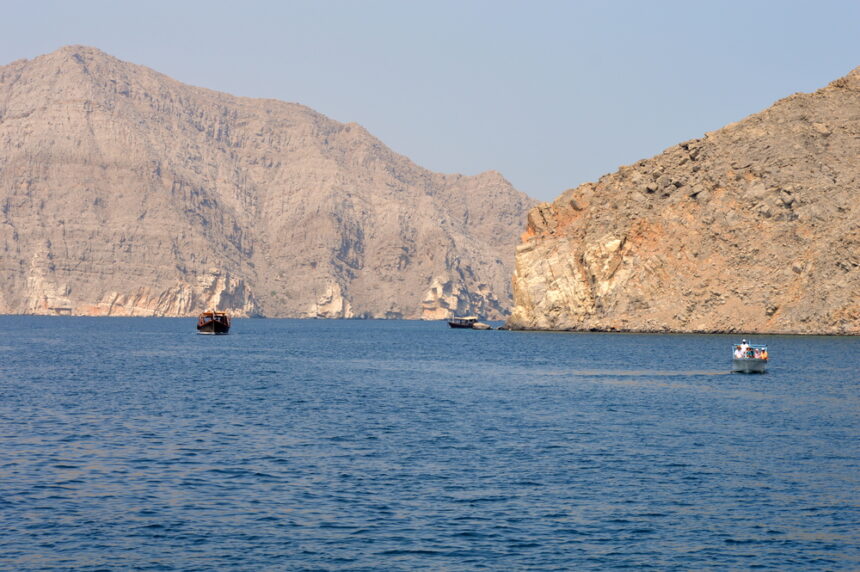
A former U.S. Navy Fifth Fleet commander and a prominent Middle East scholar are calling for an international framework to govern commercial shipping through vital global waterways, suggesting that compensating coastal nations for managing critical chokepoints could offer a more durable solution than the existing international law that Iran demonstrated can be unilaterally disrupted.
The proposals emerged during a webinar hosted by the Middle East Institute on Aug. 4, where retired Vice Admiral Kevin Donegan and Texas A&M University professor F. Gregory Gause III addressed the implications of Iran’s closure of the Strait of Hormuz and what it reveals about the vulnerability of global commerce.
Donegan, who commanded both the Fifth Fleet and the 32-nation Combined Maritime Forces in the Middle East, said that under the United Nations Convention on the Law of the Sea, commercial shipping is guaranteed toll-free passage through vital straits, and that protection must remain intact. But he warned that Iran’s demonstrated ability to close the Hormuz strait and its continuing threat to the waterway’s significantly reduced commercial traffic signals that these events will reshape not only longstanding norms but also the international legal frameworks governing the flow of commerce.
The Malacca model as a reference point
One functional example raised during the webinar is the voluntary Aids to Navigation Fund that shipping companies pay to Singapore, Indonesia and Malaysia in exchange for those countries’ support of navigational safety and environmental protection in the Strait of Malacca, which connects the Pacific and Indian oceans.
That arrangement does not require shipping companies to pay tolls, which would conflict with existing international law, but rather provides voluntary compensation to coastal states that take on the work of maintaining safe transit through strategically vital waters. The distinction between a toll and voluntary compensation matters legally and diplomatically, and the Malacca framework has operated without the kind of coercion or closure threats that have characterized Iran’s approach to Hormuz.
The Strait of Hormuz carries roughly a quarter of the world’s oil and gas shipments from the Persian Gulf. Its closure has ramifications extending well beyond oil markets or Middle East security, affecting global supply chains in ways that depend on assumptions about predictable maritime access that Iran has now shown are not guaranteed.
A multilateral approach
Gause, identified as one of the United States’ foremost Middle East scholars, argued that the long-term answer requires a multilateral approach rather than a bilateral or unilateral one. He called for an international agreement, whether structured as a convention, a treaty or another form, specifically addressing the management of critical straits and the rights and responsibilities of coastal states.
The legal framework governing maritime passage was developed before the kinds of disruptions Iran has imposed on Hormuz were anticipated. Donegan said the strait closure carries implications for other chokepoints around the world that are similarly critical to global commerce, and that a failure to address the Hormuz situation adequately will have consequences for how those other waterways are treated by the countries that border them.
What the disruption revealed
Iran‘s closure of the strait demonstrated that a country with sufficient military capability and willingness to accept international pressure can effectively shut down one of the world’s most critical maritime passages, at least partially and for a sustained period, without triggering a response that fully restores traffic. Commercial shipping has adapted by rerouting and by accepting reduced flow through the area, but the underlying vulnerability has not been resolved.
The proposals discussed at the webinar attempt to address that vulnerability through economic and legal mechanisms rather than purely military ones. Compensating coastal states creates a financial incentive to keep waterways open and to invest in the infrastructure that makes navigation safe and reliable. An international convention would provide a legal architecture for resolving disputes about strait access without relying exclusively on the threat or use of force.
Neither speaker presented a fully formed proposal, and the path from a think tank webinar to international agreement on maritime law is long. But the conversation reflects a growing recognition that the existing frameworks for protecting commercial shipping through vital global chokepoints may be inadequate for the challenges now emerging.