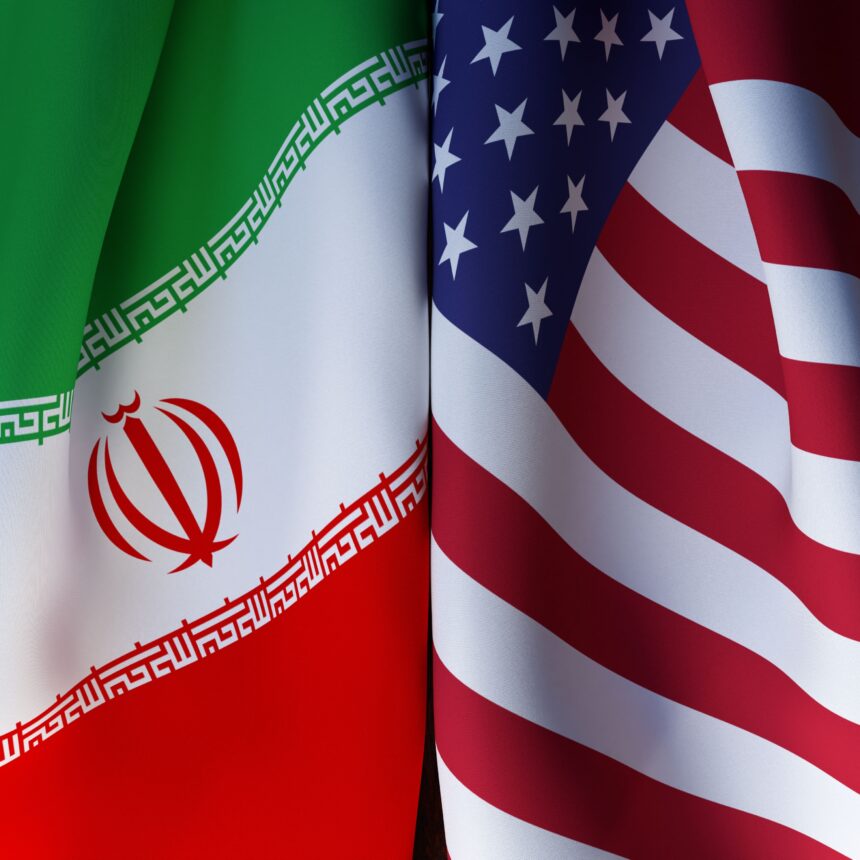
China is assessing the potential impact of expanded U.S. sanctions on its financial, energy and trade sectors as Washington widens pressure on countries and companies that do business with Iran, with officials in Beijing increasingly worried that American secondary sanctions could eventually target the banks that settle payments for Iranian oil.
The concern goes beyond losing access to Iranian markets. The deeper risk China is weighing is whether U.S. action against banks involved in Iranian oil transactions could disrupt the broader financial and trading system, which has become increasingly intertwined with Iranian energy over years of purchasing the United States has periodically targeted but not completely stopped.
The U.S. Treasury Department announced Operation Economic Outcast on Aug. 24, expanding its campaign against Iran and warning that secondary sanctions risk could extend into digital assets, gold, technology, aviation and shipping. The Treasury said countries and companies doing business in designated sectors would be given a wind-down period, after which those that fail to act could face sanctions of their own.
China’s exposure
China has been Iran’s largest buyer of oil for years. Previous sanctions targeted refineries and vessels involved in transporting Iranian crude, but the United States has not imposed penalties on major banks that participate in settling those transactions. That distinction has left a significant portion of the Iranian oil trade operating in a legal gray zone, where the underlying purchase is targeted in principle but the financial infrastructure that enables it remains largely untouched.
Treasury Secretary Scott Bessent signaled that the financial infrastructure itself may be next. He has warned that banks could become targets if they participate in systems that facilitate converting Iranian oil into revenue, and has said no country can assume exemption from U.S. sanctions.
What Chinese banks stand to lose
Banks that process payments tied to Iranian oil face a specific risk under secondary sanctions. If designated by the U.S. Treasury, they could lose access to the U.S. dollar clearing system, which runs through American correspondent banks. Dollar clearing access is essential for international trade well beyond Iran, because the dollar remains the dominant currency for global commerce. Losing it would impair a bank’s ability to process a wide range of international transactions, not only those connected to Iran.
This is the leverage the Treasury is implying. The threat is not simply a fine or a restriction on Iran business. It is a potential disruption to the bank’s entire international business.
The timeline and the wind-down
The wind-down provision announced as part of Operation Economic Outcast creates a window during which countries and companies can reduce their exposure before sanctions apply. How long that window will last has not been specified publicly.
For these entities, the wind-down creates a decision point. Continuing to purchase Iranian oil and process the related payments while U.S. pressure is escalating carries increasing financial risk. Reducing exposure before the deadline protects the more valuable relationships with the U.S. financial system. The calculation depends heavily on how seriously Beijing believes the Treasury’s signals.
The relationship between Beijing and Washington
China and the United States are simultaneously engaged in trade negotiations over tariffs while Washington escalates financial pressure on Chinese entities tied to Iran. The overlapping pressure creates a complex negotiating environment in which any concession on one front can be used as leverage on another.
Beijing’s public posture has been that the measures are unlawful extraterritorial enforcement and that China will take necessary measures to protect its legitimate interests