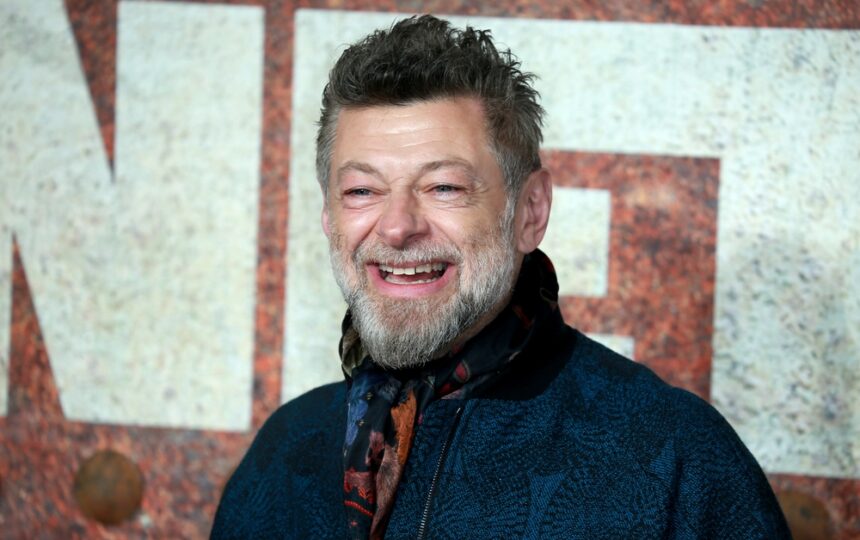
Andy Serkis, the actor best known for bringing Gollum to life in Peter Jackson’s Lord of the Rings trilogy, has responded to questions about the franchise’s lack of diversity more than two decades after the original films were released, acknowledging the criticism while pointing to the source material’s roots in Norse mythology as context for understanding the creative choices made.
Serkis is currently in New Zealand directing and starring in The Hunt for Gollum, the latest addition to the Tolkien film universe, which is scheduled to arrive in cinemas next year. He was asked by a broadcaster about the predominantly white casting that has characterized the franchise since its original film trilogy debuted in the early 2000s, a conversation that has continued to resurface as the entertainment industry has focused more attention on representation.
What Serkis said and how he framed it
Serkis pointed to Tolkien’s literary influences as the foundation for understanding the world depicted in the films, noting that the author drew heavily from Norse mythology in constructing the cultures and settings of Middle-earth. He described the Shire, the pastoral homeland of the hobbits, in terms that acknowledged its homogeneous quality, noting that the characters who inhabit it are largely indifferent to the wider world and resistant to outside influence.
He said he was aware of the criticism that had been directed at the franchise’s casting and did not dismiss it, but the framing of his response situated the choices within the context of adapting source material that was written with specific cultural and mythological influences in mind. The acknowledgment that criticism exists represents a more direct engagement with the subject than the franchise has typically offered in the years since the original films became global cultural touchstones.
The Hunt for Gollum and its context
The Hunt for Gollum is being made against a backdrop of renewed interest in expanding the Tolkien cinematic universe following the mixed reception of the Amazon series that explored the Second Age of Middle-earth. Serkis, who first played Gollum in 2001 and reprised the role in the subsequent Hobbit trilogy, is stepping behind the camera for the new production while also returning to the character he is most associated with.
Directing a major Tolkien project comes with its own set of expectations about how the expanded world should be handled relative to the diverse representation standards that audiences and critics apply to contemporary productions. The original trilogy was made in an era when those standards were less central to public discourse around major studio films, but the passage of time has not reduced the scrutiny applied to choices made in that earlier period.
Diversity in major fantasy franchises
The question of how major fantasy franchises handle race and representation has become more prominent across the industry as studios have made deliberate choices to cast more diversely in adaptations of source material that was originally written with little attention to that dimension. Those choices have generated both enthusiasm from some audiences and criticism from others who argue that departing from the literal descriptions in source texts is inappropriate.
Serkis’s acknowledgment of the criticism while contextualizing it through Tolkien’s influences reflects a carefully considered response to a question that has no fully satisfying answer for everyone who cares about it. The Hunt for Gollum will face its own scrutiny when it arrives in cinemas, both for how it handles the story and for the choices it makes about who appears on screen and in what roles.