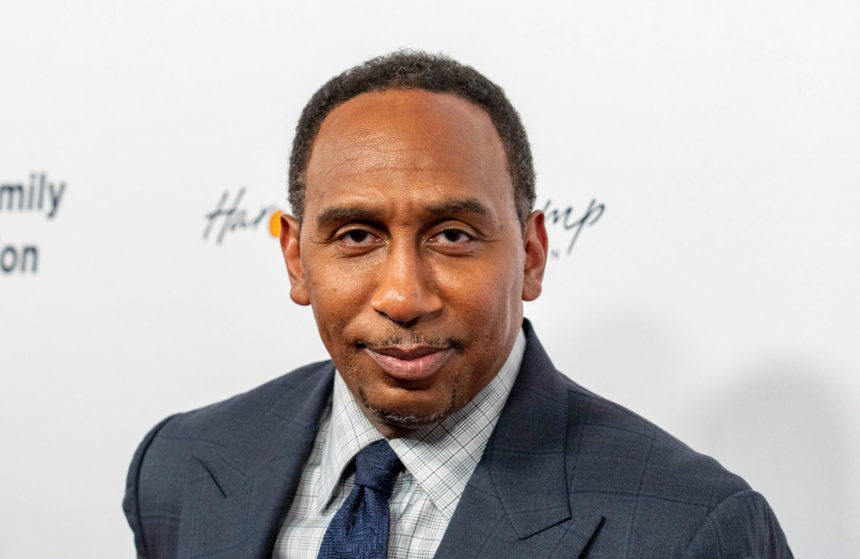
Stephen A. Smith was far from the only public figure to react to the sudden death of Lindsey Graham, but his response quickly became the one people could not stop talking about. The longtime senator from South Carolina died Sunday morning at 71 following a sudden illness. His office confirmed the news and asked for privacy for the family during what it called an incredibly difficult time.
Tributes from political figures arrived quickly. President Donald Trump ordered flags across the country lowered through Saturday evening and honored Graham as a dedicated public servant who gave much of his life to his home state and the nation. Lawmakers from both parties followed with statements recalling his decades of work on foreign policy and national security.
As condolences poured in from across the political spectrum, attention shifted toward ESPN personality Stephen A. Smith, whose response to the senator’s death set off a wave of criticism online. Smith is known for weighing in on major news stories well outside the world of sports, and this instance proved no different, though the backlash this time carried a sharper edge than usual.
How Smith entered the conversation
Rather than offering a straightforward tribute, Smith shared a clip from his podcast tied to Graham’s death. The post centered on a conversation from the debut episode of what he now calls the POTUS Show, a program airing on a SiriusXM channel of the same name. The clip was framed as a remembrance of the late senator, but the packaging drew attention for reasons that had little to do with Graham himself.
Many viewers felt the post read more like a promotional push for the new show than a genuine expression of condolence. That framing struck a nerve with a segment of Smith’s audience who felt the moment called for something more sincere.
Smith’s critics speak up online
The backlash spread fast across social media, with reactions ranging from confusion to outright frustration. Some questioned whether the post reflected a publicity strategy rather than personal sentiment, arguing that rushing to comment after a public figure dies has become a hollow ritual. Others were simply puzzled by the branding attached to what should have been a moment of acknowledgment and mourning.
The criticism points to a broader discomfort audiences feel when media personalities blur the line between genuine tribute and content creation. In an era where every post carries promotional weight, tying a death announcement to a show launch is hard to separate from self interest, regardless of intent. For a figure like Smith, whose brand thrives on being everywhere at once, the moment served as a reminder that timing can matter as much as the message itself.
Smith has not addressed the criticism directly, and whether the backlash leaves any lasting mark on his audience or his new venture remains unclear. Some longtime followers defended the post as harmless, arguing that grief and promotion are not always mutually exclusive in the world of modern media.
The loss of Lindsey Graham
Beyond the social media noise, Graham’s death marks a significant moment in the nation’s political life. He served in the Senate for more than two decades and was a prominent voice on foreign policy, national security and a wide range of legislative issues that shaped the country during his tenure. He was 71.
- Graham represented South Carolina in the Senate for more than 20 years
- He was a leading voice on foreign policy and national security matters
- His office cited a sudden illness as the cause of death
His passing leaves a vacancy in South Carolina’s Senate delegation and raises questions about what comes next for the state politically. For now, his family has asked that the focus remain on remembrance rather than politics, a request the reaction to Smith’s post may have briefly complicated.
The contrast between the solemnity of Graham’s death and the noise that followed shows how quickly public grief can become tangled with the mechanics of modern media. Whether Smith responds to the criticism or lets it pass may shape how this moment is remembered alongside the senator’s legacy.