A southern elephant seal known as Neil has captured the attention of wildlife enthusiasts around the world after becoming a recurring presence on the Tasmanian coastline, where his bold and playful personality has made him one of the most recognizable marine mammals in Australia.
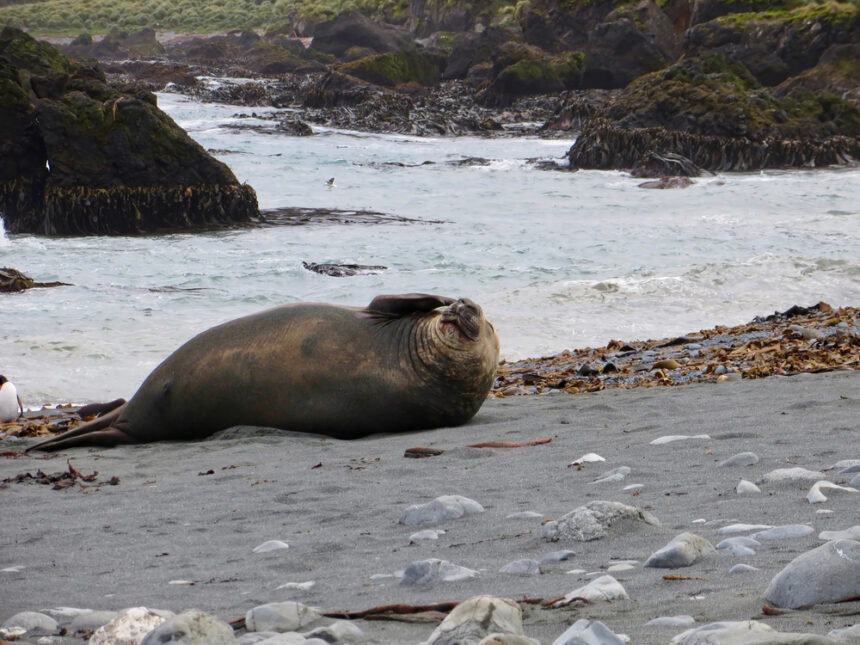
Neil weighs approximately one tonne and is currently resting on the Tasmanian coast during his moulting season, a period when elephant seals shed their skin and fur and require extended rest on land. The pause in his usual routines has given photographers and curious onlookers a rare chance to observe him from a distance, with marine officials present at recent sightings to maintain a safe buffer between the seal and the public.
A seal with a personality all his own
What distinguishes Neil from other occasional seal sightings on the Tasmanian coast is the character he has displayed across repeated appearances. He is known to venture well beyond typical resting spots on the beach, having been observed visiting private homes, occupying roads, and interacting with objects in his environment in ways that frequently leave those objects in different positions than he found them.
That willingness to engage with the human world around him, while remaining entirely indifferent to whether those interactions are convenient for anyone else, has made him an endearing figure. Social media footage of his appearances regularly reaches audiences far beyond Australia, and the combination of his enormous size and his apparent lack of concern for the disruption he causes has made him a particular favorite in wildlife communities online.
A photographer’s long search and a magical result
Wildlife photographer Umesh Ranasinghe had been following Neil’s story through social media before deciding to seek him out in person. He learned of Neil’s whereabouts through a circulating video but found that the exact location had been deliberately withheld from public posts, a practice he later described as admirable for the protection it provides to the seal’s space and wellbeing.
After researching online and reaching out through private channels to piece together where Neil might currently be resting, Ranasinghe eventually located the seal and joined a group of onlookers at the approved viewing distance maintained by marine officials.
What followed was the kind of photographic moment that wildlife photographers describe waiting years to experience. As Neil rested in the crisp Tasmanian air, his warm breath produced a visible misty effect as it met the cold temperature, creating a cloud of condensation that Ranasinghe framed and captured in what he has called his dream shot. The image shows the breath suspended in the air above the seal, producing a quality that makes it feel both intimate and otherworldly.
The value of protecting the seal’s location
The fact that Neil’s exact location is generally kept out of public social media posts reflects a broader awareness among Tasmanian wildlife communities about the risks that come with viral animal fame. Elephant seals require undisturbed rest during moulting, and large numbers of people converging on a location to observe or photograph them can cause stress and disrupt the natural processes the rest period serves.
The presence of marine officials at viewing sites during Neil’s appearances ensures that the public interest in him can be accommodated safely without putting the animal at risk, a balance that has allowed his story to reach global audiences while keeping him protected.
For Ranasinghe, finding Neil required patience and discretion, and the image he brought back suggests those qualities were entirely worth it.