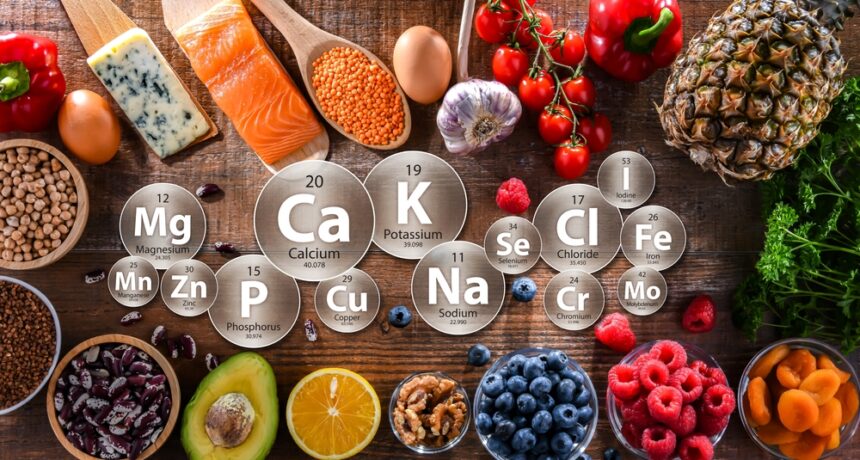
A person can do everything right, sleep eight hours, eat well, manage stress, and still find themselves reaching for a third coffee by midday with no explanation. Before attributing that persistent drag to age, a demanding schedule, or simple bad luck, it may be worth considering a question measured not in lifestyle choices but in milligrams.
Minerals are among the least discussed yet most foundational elements of human physiology. They activate the enzymes that convert food into usable energy at the cellular level. They regulate gene expression, drive cellular signaling, and modulate the hormones the body produces in response to stress. Without adequate mineral levels, these processes do not simply slow down. They begin to break down entirely.
The engine behind everything the body does
Food scientists and nutritional researchers have described the relationship between minerals and the body’s core functions in terms that make the stakes clear. Minerals do not merely support health in a supplemental sense. They are the mechanism through which the body’s fundamental chemistry operates. A significant deficiency does not produce a subtle effect. It is more like running an engine without the components that make combustion possible.
That framing helps explain why someone can appear to be living a healthy lifestyle and still experience a constellation of symptoms that seem unrelated on the surface but share a common root. Fatigue, brain fog, disrupted sleep, digestive irregularity, weakened immunity, and declining oral health have all been connected in research and clinical observation to mineral insufficiency. Each of those systems depends on mineral-dependent enzymatic processes to function correctly.
When the gap becomes impossible to ignore
For some people the consequences of mineral depletion are gradual and easy to rationalize away. For others the disruption is significant enough to interfere with daily function and work capacity. People who have explored conventional medical pathways without resolution sometimes discover through functional or integrative medicine practitioners that mineral insufficiency was contributing to their situation all along.
When mineral levels are restored through targeted supplementation or dietary adjustment, the recovery can be measurable and observable, sometimes in ways that surprise the medical professionals monitoring it. Improvements in dental health, immune function, and cognitive clarity have been documented in individuals who addressed underlying mineral deficiencies after years of unexplained decline.
Why deficiency is more common than most people realize
Modern diets in industrialized countries have changed substantially over the past century in ways that affect mineral availability. Soil depletion from intensive agricultural practices has reduced the mineral content of many commonly consumed vegetables and grains. Processing and refining remove minerals that were present in whole food forms. High stress levels increase the rate at which the body depletes certain minerals, particularly magnesium and zinc. The result is that even people who believe they are eating a balanced diet may be operating with lower mineral reserves than their body requires.
The minerals most commonly associated with energy metabolism and fatigue include magnesium, which plays a role in more than three hundred enzymatic reactions, iron, which is essential for oxygen transport and cellular respiration, zinc, which supports immune function and protein synthesis, and a range of trace minerals whose individual contributions to overall function are less well understood but increasingly studied.
Addressing mineral status begins with awareness and, where appropriate, testing. Blood panels can measure levels of certain minerals, though some require more specialized assessment to detect functional insufficiency that standard reference ranges may miss. Working with a knowledgeable healthcare provider to evaluate mineral status and address any gaps is the most reliable path for those whose symptoms do not resolve through lifestyle measures alone.