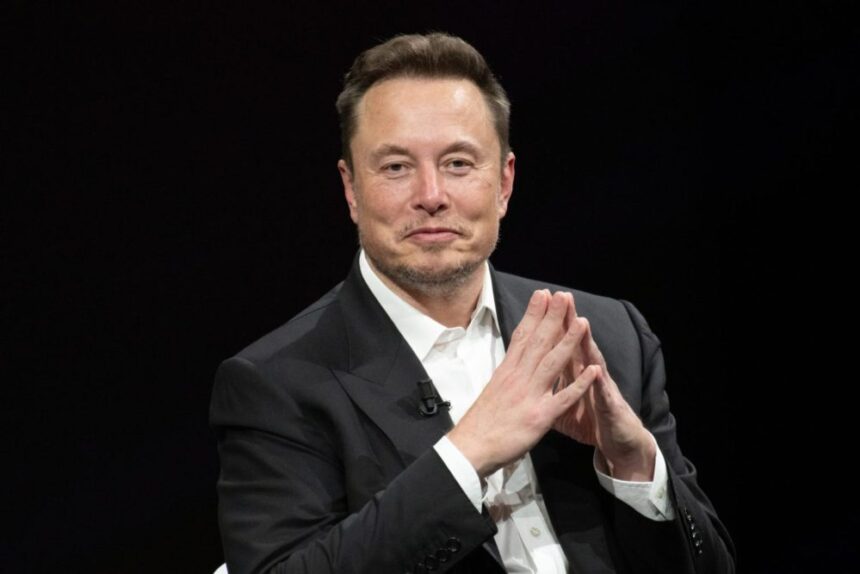
Elon Musk crossed a threshold that no individual has ever reached in recorded financial history on June 12, becoming the world’s first trillionaire as SpaceX completed what is now the largest initial public offering in Wall Street history.
The company, which spans rocket manufacturing, satellite internet infrastructure, and artificial intelligence development, made its debut on the Nasdaq exchange to extraordinary investor demand. The reception pushed SpaceX’s market valuation to approximately two trillion dollars shortly after trading began, a figure that combined with Musk’s existing stake in Tesla Motors to lift his total net worth past the trillion dollar mark by the close of trading.
A gap that defies comprehension
Before the opening bell on June 12, Forbes estimated Musk’s net worth at approximately $981 billion, meaning the SpaceX debut carried him across the final threshold within a single trading session. The speed of the crossing reflected just how much of his wealth was tied to the market’s judgment of SpaceX’s long-term potential, and investors made that judgment emphatically.
The distance between Musk and the next wealthiest people on the planet is difficult to contextualize. The second-richest individual holds roughly $296 billion in estimated net worth, meaning Musk now surpasses the combined wealth of several of the world’s most successful technology entrepreneurs. The top of the global wealth ladder, which has been crowded with centibillionaires for the past decade, now has a category entirely to itself.
What drove SpaceX’s explosive debut
Investor enthusiasm for SpaceX reflected a bet on ambition at a scale that few companies in any era have attempted. The company has built a dominant position in commercial rocket launches, holds a growing share of the global satellite internet market through its Starlink division, and has positioned itself at the center of both government space programs and private commercial spaceflight.
The AI component of SpaceX’s portfolio added another dimension to the investment case, with buyers drawn to the possibility that Musk could replicate across multiple industries the kind of market-defining outcomes that have characterized his other ventures. Tesla transformed the global automotive industry’s trajectory. The question investors answered on June 12 was whether SpaceX could do something comparable across the industries it touches.
The answer, measured in market capitalization and in the trillionaire status now attached to its founder, was an unambiguous yes.
A moment that redefines what wealth means
The arrival of the world’s first trillionaire is a milestone that economists, policy analysts, and the broader public will be processing for some time. It arrives at a moment when debates about wealth concentration, the power of individual technology entrepreneurs, and the relationship between private capital and public infrastructure are already prominent in political conversations across the world.
Musk now controls companies that launch national security satellites, provide internet access across dozens of countries, manufacture a significant share of the world’s electric vehicles, and operate some of the most heavily used artificial intelligence platforms in existence. The trillion dollar figure attached to his name is less a number than a symbol of how thoroughly a small number of technology-driven enterprises have reshaped the boundaries of private wealth in the 21st century.
History recorded the moment at the close of trading on June 12, 2026.